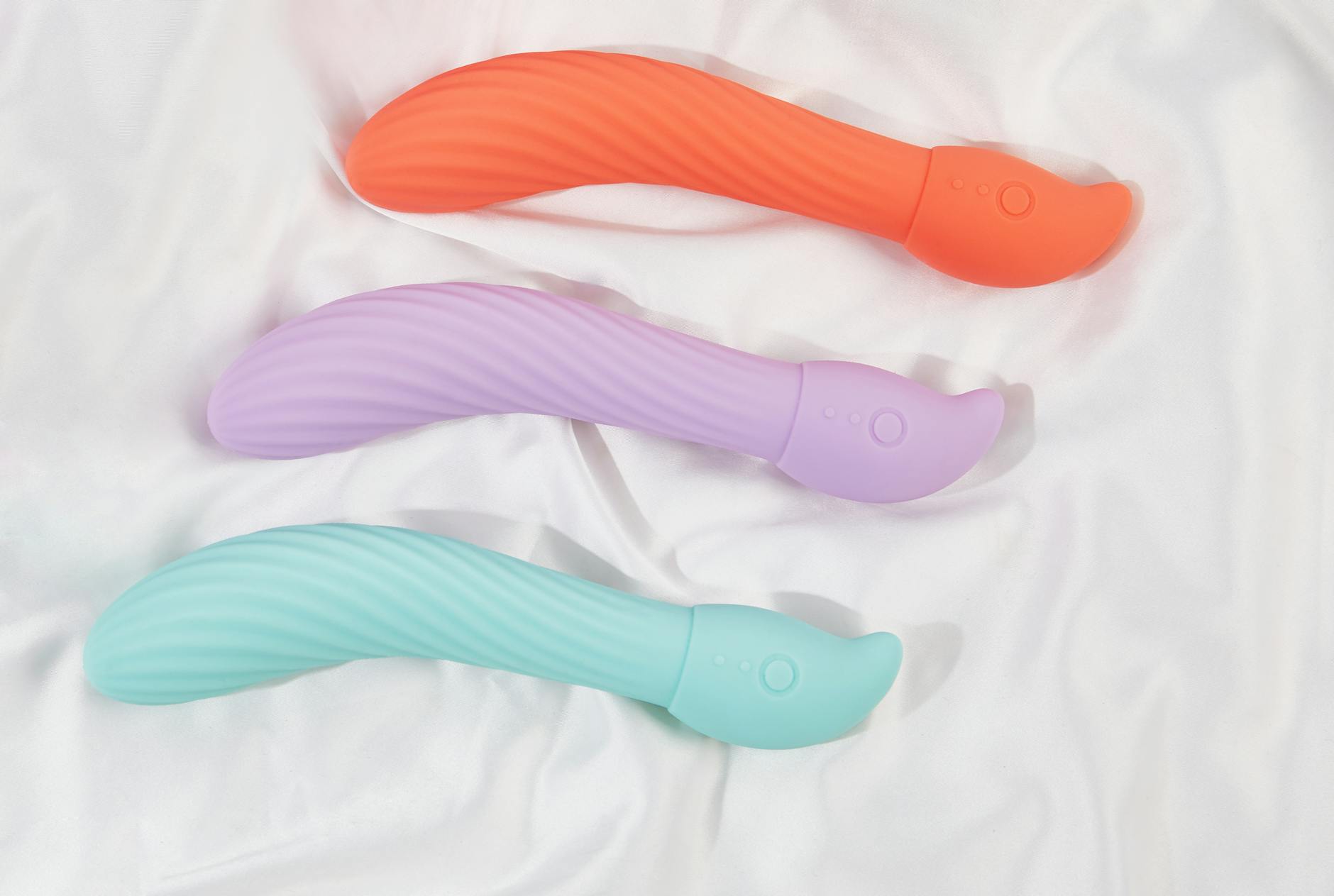
How Lemon Vibrators Help When Arousal Takes Longer to Build
Let's be real. You used to be able to go from zero to fully aroused in five minutes. Now it takes twenty. Or it doesn't happen at all until you've been with your partner for forty-five minutes and honestly, who has that kind of uninterrupted time.
This is one of the most common shifts people experience, and it's almost never talked about directly. The conversation usually stays vague: "My body doesn't respond like it used to." But what's actually happening is more specific. Your arousal arc has changed. The speed has slowed. The trigger point has moved.
Here's what you need to know: this is normal, it's physical, and there are things that actually work. Lemon clitoral vibrators happen to be one of the most effective tools for this exact problem.
Why arousal gets slower (and it's not always hormones)
First, let's look at what's actually happening physiologically. When you're aroused, your body goes through a cascade of changes. Blood flows to your genitals. Your clitoris fills with blood and becomes more sensitive. Your vagina lubricates. Your heart rate picks up. Your brain releases dopamine and oxytocin.
All of that takes time. In your twenties and thirties, your nervous system was primed for quick response. Your estrogen was steady and high. Your pelvic tissues were thick and reactive. Your cardiovascular system bounced back fast.
Now, one or more of these things is probably true. Your estrogen has dropped (whether from age, medication, or hormonal changes). Your baseline blood pressure or resting heart rate has shifted. You're carrying stress differently. You have less of the neurochemical cocktail that used to create instant arousal.
But here's what doesn't usually get mentioned: arousal slowdown isn't just biology. It's also attention.
If you're managing a household, working full-time, dealing with kids or aging parents, managing health stuff, or honestly just existing in a noisy world, your nervous system isn't primed for arousal. It's primed for threat detection and task management. Your brain doesn't flip into pleasure mode the moment you get into bed. It needs a runway.
This is why partners sometimes get frustrated and why you might too. The expectation (ours, theirs, our parents') is that arousal should be instant. It isn't, and it wasn't ever for everyone. But it used to be for you, so the change feels like loss.
It isn't. It's just a reset.
The mismatch between speed and sensation
Here's where it gets tricky. Your arousal is slower, but your body's capacity for pleasure hasn't gone anywhere. This creates a weird gap.
You need more time to warm up. But you also need sensation to activate during that warm-up. Light touch doesn't cut it anymore. Gentle foreplay that used to work feels ineffective. You end up lying there waiting to feel something, which is the opposite of arousing.
So you either push through (which can feel exhausting) or you give up (which can feel like failure). Neither is actually the solution.
The solution is to skip the foreplay that doesn't work and jump straight to the stimulation that does. This is where lemon vibrators become essential.
Unlike a partner's hand or mouth, which have to start gentle and build gradually, a lemon clitoral vibrator delivers consistent, moderate-to-strong sensation immediately. You can start at a pattern that actually wakes up your clitoris instead of tickling it. You get the neural input you need to cross the arousal threshold. Then the rest of your body catches up.
How lemon vibrators solve the slow-arousal problem
Lemon clitoral vibrators like the Lem use suction and pulsing patterns instead of simple vibration. Here's why that matters for slow arousal.
First, the sensation is distinctive. Your clitoris has thousands of nerve endings, but they're not all the same type. Some respond to pressure. Some respond to vibration. Some respond to rhythmic pulsing. The Lem's suction pattern activates multiple nerve types at once, which creates a stronger signal to your brain that arousal is happening.
Second, you can control the intensity from the start. You're not building from nothing. You start at a level that actually registers as pleasurable. This matters because your slow arousal isn't about lacking desire. It's about needing a stronger initial signal.
Third, a lemon vibrator takes the pressure off your partner. If your partner has been trained to think their job is to arouse you, and they're failing because you're slower now, that creates tension. A toy removes that expectation. Your partner becomes a companion rather than a problem-solver.
What else actually helps (beyond the vibrator)
The vibrator is one tool, but you need the full setup.
Extend your foreplay intentionally. I don't mean more of the same thing. I mean different thing. Kissing is not going to arouse you right now. What will? Maybe it's music. Maybe it's a conversation about something you find genuinely sexy. Maybe it's ten minutes alone with your own hand before your partner joins in. Figure out what actually shifts your nervous system, then build that into your routine.
Use lube earlier than you think you need it. You're slower to lubricate now. That's not a sign of not being aroused. It's a sign that arousal and lubrication have decoupled slightly. Use water-based lube as part of the warm-up, not as a sign you're doing something wrong.
Plan for it. This sounds unromantic, but it isn't. Knowing you have time set aside for pleasure changes your nervous system hours before you get into bed. You stop treating it as something that has to spontaneously happen. You give yourself permission to actually be present.
Stop checking if you're aroused yet. The moment you start monitoring whether you're feeling turned on, you've shifted from pleasure to performance. This is the fastest way to guarantee slow arousal stays slow. Get out of your head. Use the vibrator. Let your body do its thing without commentary.
Why lemon vibrators feel different after you're already aroused
Here's something people don't expect. Once you've used a lemon clitoral vibrator to cross the initial arousal threshold, something shifts. Your body is actually in the game now. Your blood pressure has risen. Your clitoris has filled. You're in the neurochemical state that used to be instant.
Now the vibrator feels different than it did three minutes ago. Stronger. More nuanced. Sometimes partners are surprised by how quickly things intensify once someone has actually been aroused.
This is completely normal and it's why I recommend starting with the lower intensity patterns, even if you think you'll want more. You will probably want more. But your body is going to tell you when.
The mental piece (which is half the battle)
Slow arousal often comes packaged with some shame. You should be faster. Your body should respond. You should want it more. You shouldn't need a vibrator. You're broken somehow.
None of that is true, but I know it feels true.
What I've seen work is separating the two conversations. "My body takes longer to respond" is different from "I don't want sex." "I need a vibrator" is different from "I don't find my partner attractive." "My arousal is slow" is different from "Something is wrong with me."
They're usually not connected. But we treat them as though they are, which makes the whole thing harder.
Your body's arousal timeline has changed. That's a fact. A lemon vibrator is a tool that meets your body where it actually is, not where you think it should be. That's not failure. That's precision.
Using lemon vibrators solo versus with a partner
Slow arousal feels very different depending on whether you're alone or with someone.
Solo, you can experiment without performance pressure. You can find out exactly what intensity and rhythm actually works for you. This matters because people often don't know what they need until they're alone with the tool and their own pleasure. Use that knowledge later with a partner.
With a partner, a lemon clitoral vibrator becomes a conversation starter. "I'm going to use this to help me warm up" removes the implication that anything is wrong with them or with your desire for them. It's literally just a different foreplay tool.
Some partners love this. Some partners feel initially insecure. That's fair. A quick conversation about what's actually happening usually helps: "My arousal is slow right now. This helps me get there so we can be together. It has nothing to do with you or how I feel about you."
If that conversation doesn't go well, that's a different problem. But it's not an arousal problem. It's a communication or compatibility problem, and it deserves its own attention.
When to consider other support
Slow arousal is usually just slow arousal. But if it's accompanied by zero desire, or if it appeared suddenly after starting a medication, or if you're experiencing pain, that's worth talking to a doctor about.
If you're on an antidepressant and your arousal crashed, your prescriber might be able to adjust the timing or dose. If you started birth control and this coincided with it, that might be worth revisiting with your gynecologist. If your slow arousal is tied to depression or anxiety, that's the thing to treat.
But slow arousal on its own? That's something you can absolutely work with.
Frequently Asked Questions
Why does arousal take longer as you get older?
Arousal slowdown happens because of several overlapping shifts. Estrogen and testosterone both decline, which changes how quickly blood flows to your genitals and how sensitive your tissues are. Your nervous system also shifts. You're usually managing more stress and more mental load, which means your brain takes longer to switch into pleasure mode. Finally, your cardiovascular system itself responds more slowly. All of that together creates a slower arousal arc. It's not a sign of anything wrong. It's just how bodies change.
Can lemon vibrators help if you have no arousal at all?
If you have zero desire and zero response even with direct strong stimulation, that's a different issue than slow arousal. That usually points to hormonal changes, medication effects, depression, or relationship stuff. A vibrator might help you discover sensation again, but it's not a fix for the underlying cause. Talk to a doctor if arousal completely disappeared rather than just became slower.
How long should it take to warm up with a lemon vibrator?
Most people find that five to ten minutes of consistent stimulation at a moderate intensity gets them across the arousal threshold. Some people need longer. Some people find that after the first few sessions, the time speeds up because their body recognizes what's coming. There's no right answer. Pay attention to what your body actually needs rather than what you think it should need.
Is it normal for arousal to be slow if you're with the same partner long-term?
Yes, and it's also fixable. Long-term partnerships often have slower initial arousal because the nervous system isn't primed by novelty anymore. This is completely normal. The fix is usually intentional foreplay that actually works (not what used to work), making time for it, and sometimes using tools like lemon vibrators to bridge the gap between slow arousal and the rest of your body's response. It's not a sign that the relationship is dead.
Do you have to use a vibrator if arousal is slow?
No. You can also extend foreplay, use lube, plan for sex rather than expecting it spontaneously, reduce stress, talk to a doctor about medication timing, or address relationship stuff if that's the real issue. But if you've tried those things and slow arousal is still a problem, a lemon clitoral vibrator is one of the most effective tools available. It's not cheating. It's just meeting your body where it is.
Can arousal speed up again, or is slow arousal permanent?
It depends on what caused the shift. If it's hormonal, hormone therapy might help. If it's medication, adjusting the timing or changing drugs might help. If it's stress or relationship stuff, fixing those things might help. If it's just age and nervous system shift, slow arousal is probably your new normal. The good news is that slow arousal is completely manageable and often leads to deeper, more intentional pleasure than the old instant kind.
What comes next
Slow arousal isn't a flaw. It's a signal that your body needs a different approach. A lemon clitoral vibrator meets that need directly by providing the kind of sensation that actually works now. Start where you are, not where you think you should be, and build from there.
If you want to explore this further or talk through what might work best for your specific situation, reach out. That's what I'm here for.