Here's what nobody tells you about arousal after 35
Arousal doesn't disappear as you age. It just takes longer. Most people experience this shift somewhere between their mid-30s and early 40s and assume something is wrong. It's not. It's biology. And once you understand what's happening, you can work with your body instead of against it.
The slowdown is real, measurable, and completely normal. Studies show that the time it takes to reach peak arousal increases by an average of 5-10 minutes for women in their 40s compared to their 20s. But here's what matters more: you can still get there. And often, the quality of arousal is deeper and more nuanced than it was before.
Why arousal slows down as you age
Three things change physiologically. First, blood flow to the genital area becomes less immediate. In your 20s, arousal is a quick chain reaction in your nervous system. Stimulus hits, nerves fire, blood vessels dilate, tissues swell. By your 40s, that pathway still exists but it's less reactive. The same stimulus takes longer to trigger the cascade.
Second, hormone levels shift. Testosterone and estrogen don't necessarily drop dramatically, but they fluctuate differently. Testosterone, which drives desire and genital sensitivity in all bodies, becomes more variable. You might feel nothing one week and everything the next.
Third, skin thickness and tissue elasticity change. This means nerve endings are further from the surface, so direct stimulation feels less intense. You're not numb. You just need a different type of input to reach the same sensation.
None of this is permanent or irreversible. It's an adjustment, not a deadline.
What actually changes in arousal response
Let's separate myth from fact. Arousal slowdown does NOT mean:
- You've lost your capacity for orgasm
- Your desire is gone forever
- Sex will never feel good again
- You need hormone replacement to fix it
What actually shifts:
The warm-up phase gets longer. You used to hit peak arousal in 5-8 minutes. Now it's 15-20. That's it. Add time to foreplay and you're back where you started.
Genital blood flow becomes less automatic. This is where clitoral vibrators become genuinely useful. External stimulation jumpstarts the process rather than waiting for it to happen passively.
Mental focus matters more. In your 20s, arousal was fairly automatic if there was stimulation. Now your brain has more say. Distraction, stress, or low interest registers faster and pulls you out of arousal. This is actually an advantage if you learn to use it, because it means you can deepen arousal through intention.
Lubrication is less instant. Your body still produces it, but not as quickly. Water-based lubricant isn't a sign of dysfunction. It's a tool that acknowledges the actual timeline of your body.
Why lemon vibrators work better when arousal is slow
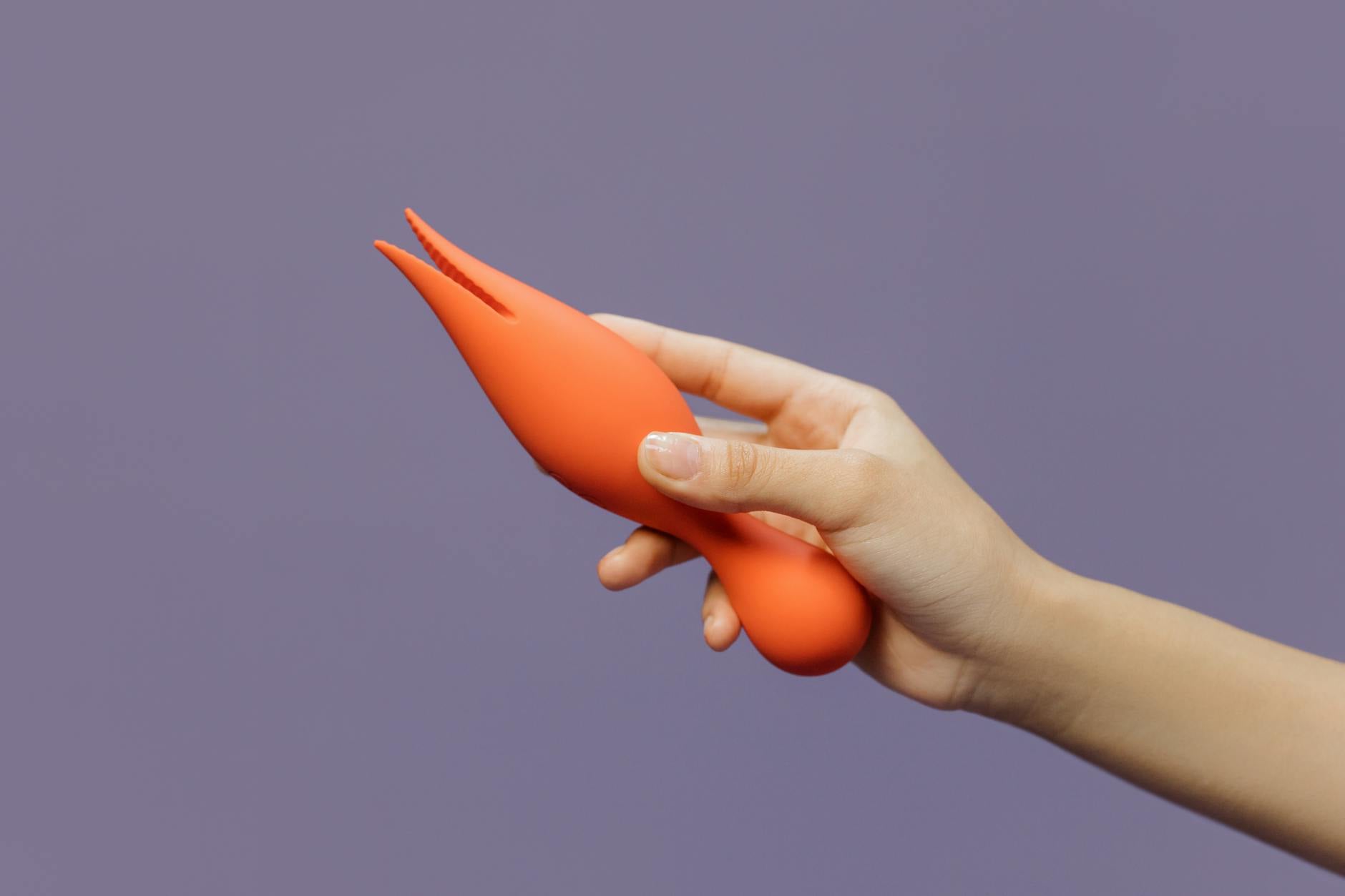
Clitoral vibrators, especially air-suction devices like the Lem, bypass the waiting phase. Instead of trying to coax blood flow to happen passively, stimulation directly activates the nerve network in the clitoris. You're not fighting your body's timeline. You're meeting it halfway.
Here's the mechanism. The clitoris has thousands of nerve endings. When you're young, general stimulation activates them. When you're older, you need more direct or more intense stimulation. The Lem uses gentle suction that mimics the exact pressure and rhythm that tends to work fastest for people experiencing slower arousal. You're not forcing anything. You're using a tool that matches your actual physiology.
The other advantage: vibrators work independently of your mental state. You don't have to "get in the mood" first. You can start the physical process and often the mental arousal follows. This flips the usual script. Instead of waiting for desire to show up so you can have sex, you start the physical process and desire catches up.
For people with partners, this is freeing. You don't have to feel broken because you need 20 minutes instead of 5. You just use a tool that compresses the timeline.
How to use a lemon clitoral vibrator when arousal is slow
Start before you think you're ready. This sounds counterintuitive but it works. If you're used to waiting until you feel a spark, you're already working against your body. Instead, set aside 20-30 minutes with low expectations. Use a clitoral vibrator like the Lem at a lower setting. Start at pattern 1 or 2.
The goal isn't to orgasm instantly. It's to kickstart the physical arousal process so your body can catch up mentally. Usually by 10-15 minutes, you'll notice genital blood flow, lubrication, and sensation increasing. Once that momentum starts, the rest follows.
With a partner, communicate the timeline upfront. "I need about 20 minutes of external stimulation to feel fully aroused." This isn't a complaint. It's information. Many partners actually prefer this because it makes the interaction explicit and takes the guesswork out of whether you're enjoying it.
Lubrication is your friend here, even if your body produces it naturally. Water-based lube decreases friction and lets the vibrator work more effectively. Use it from the start. It's not a sign that something is missing. It's a tool that makes the whole experience faster and more comfortable.
The mental side matters as much as the physical
As arousal gets slower, distractions hit harder. If you're thinking about work or worried about whether you're taking too long, your arousal will stall. This is actually useful information because it tells you something changed. Your younger self might have been able to tune out noise and get aroused. Your current self can't. That's not worse. It's just different.
Use this to your advantage. Create a context where arousal can happen. That might mean phone on silent, a locked door, a specific time of day when your mind is less busy. For some people, that's morning. For others, it's after a glass of wine or after your partner has done something that made you feel loved. Pay attention to when arousal comes easier.
Partners can help here too. If you know your partner needs 20 minutes and a specific environment, you can create that deliberately. You can build anticipation. You can focus on that person rather than multitasking. Often, the slowness of arousal becomes an advantage because it forces more presence.
When to check if something else is going on
There's a difference between arousal that takes longer and arousal that doesn't happen at all. If you're using lemon vibrators and getting external stimulation but still feeling completely numb, something else might be at play. Medication side effects, depression, relationship strain, or hormonal imbalance can all kill arousal more completely than age alone.
If arousal is absent rather than just slower, a conversation with your doctor is worth it. You might need to adjust medication, discuss hormone levels, or rule out health factors. A therapist can also help sort out whether it's a relationship issue, a self-image issue, or purely physical.
For most people though, the slowdown that comes with age is just that. A slowdown. And once you accept the timeline and adjust your approach, sex often becomes better, not worse.
FAQ: Common questions about arousal and aging
Does arousal slowdown mean I'm losing my libido?
No. Libido and arousal response are different things. Libido is your interest in sex. Arousal response is how quickly your body reacts to stimulation. You can have high libido and slow arousal response. You can also discover that you actually want sex more at 40 than you did at 25, but your body just needs more runway. Pay attention to the difference.
Can I use a lemon vibrator every day without losing sensitivity?
Yes. Unlike what some people claim, using vibrators doesn't desensitize you. Your clitoris has a fixed number of nerve endings. Using a vibrator activates them. It doesn't wear them out. Many people use vibrators daily without any loss of sensation. The opposite is often true. Regular stimulation keeps blood flow active and tissues healthy.
How much longer should I budget for foreplay as I get older?
On average, add 10-15 minutes to what you used to do. That might mean 20-30 minutes of partnered foreplay before penetration, or 15-20 minutes of solo stimulation before reaching orgasm. Everyone is different. Pay attention to your actual body rather than the clock. The point is to budget enough time so you're not stressed about how long it's taking.
Is water-based lubrication necessary if my body still produces its own?
Not strictly necessary, but it helps. As you age, your body may produce lubrication but not as quickly. Adding external lubrication speeds up the process and reduces friction, which makes vibrators work more effectively. Think of it as shortening the timeline rather than replacing something your body isn't doing.
Can my partner help me warm up faster without toys?
Absolutely. Longer kissing, manual stimulation, oral sex, and other partnered touch all activate arousal. The timeline is similar to solo stimulation though. You're still probably looking at 15-20 minutes for most people. The advantage of toys is that they can compress that timeline slightly and let you reach peak arousal more reliably.
Does arousal slowdown ever reverse, or is it permanent?
It's typically permanent as a baseline, but context matters enormously. A new relationship, reducing stress, better sleep, or treating depression can all make arousal feel faster and more responsive. You're not trying to get back to age 25. You're optimizing for your current situation. Usually that's better than whatever came before.
The shift in arousal is actually an opportunity
Honestly, the longer warm-up period that comes with age gets reframed once you stop seeing it as a problem. You get more time to tune in to sensation. Your partner gets more time to connect with you. The experience becomes less about speed and more about depth. Clitoral vibrators like the Lem just make that process more reliable and let you skip the frustration phase. Your pleasure matters at every age. The way you access it just shifts. And that's not loss. That's information.
If you're navigating this change and want to explore what works for your body right now, we're here to help. Reach out to our team at /contact to talk through what might work best for you.