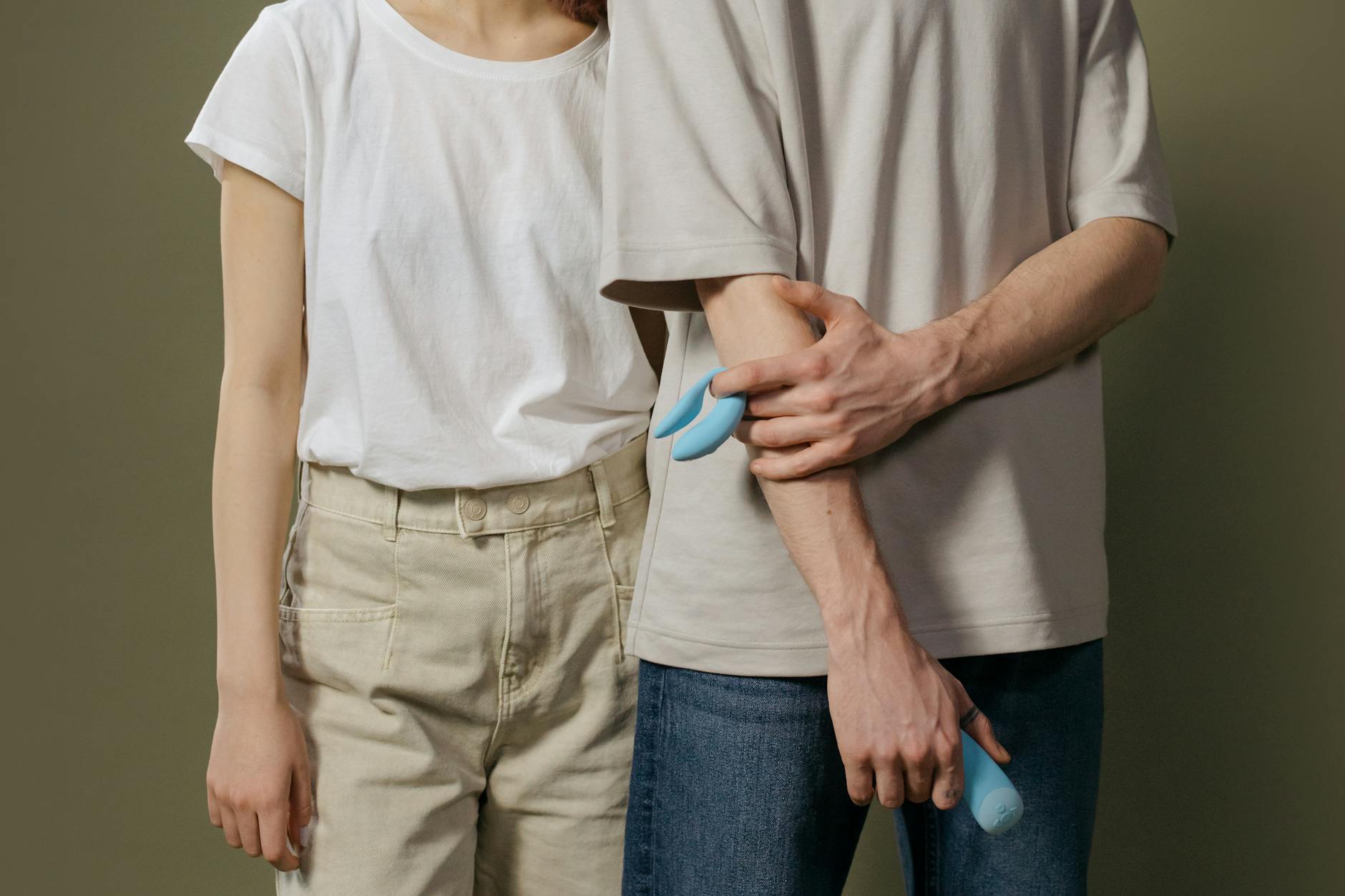
Here's what anxiety actually does to your body
Let's be real. Anxiety during sex isn't a character flaw or a sign something's broken. It's your nervous system doing its job too well. When you're worried about performance, or whether you're "normal," or whether your partner is enjoying this, your body switches into alert mode. Blood leaves your genitals and pools in your legs and arms, ready to run. Your pelvic floor tenses. Lubrication stops. Sensation gets muted.
You're not numb. You're defended. And that defense is the whole problem.
Most sex advice tells you to "relax" or "be present." Which is like telling someone with anxiety to "just not worry." Technically true, entirely unhelpful. The issue isn't a lack of willpower. It's that anxiety has hijacked the neural pathway between arousal and pleasure.
That's where lemon vibrators actually shift things.
Why lemon suction vibrators bypass the anxiety loop
A traditional vibrator works through direct stimulation. Your brain has to process the sensation, contextualize it, compare it to expectation, and decide if it's good. That's a lot of cognitive overhead when anxiety is in the room. You're thinking about whether you're taking too long, whether your body is responding "correctly," whether your partner is judging you.
Lemon clitoral vibrators work differently. The suction pattern triggers a direct nerve response that doesn't require the same level of cognitive processing. You're not thinking about pleasure. You're experiencing it before your anxious brain has time to intervene.
The lem vibrator's design is especially useful here because the pattern is rhythmic and predictable. Your nervous system starts to recognize the rhythm, and that familiarity itself becomes calming. You're not waiting for the next burst of sensation. You know it's coming. That certainty quiets the fight-or-flight response.
The performance pressure problem (and how to actually solve it)
Here's what I see in couples therapy over and over. One or both partners come in saying they're "broken." What they mean is they feel pressured to prove something during sex. Prove they're attracted, prove they can orgasm, prove they're normal, prove they're good at this.
That pressure is the opposite of what your nervous system needs to access pleasure.
When you use a lemon vibrator solo, you remove the witness. There's no one waiting for you to perform. No one timing how long this takes. No one wondering if they're doing it right. That shift alone transforms the experience for most people.
But here's the thing. If you then introduce the lem vibrator into partnered sex, something interesting happens. The vibrator becomes the focus of attention, not you. Your partner isn't watching your face to see if you're enjoying it. They're watching the vibrator, or they're watching their own pleasure and sensation. The pressure moves off you.
For partners who feel anxious about whether they're "good enough," this is transformative.
What your nervous system actually needs
Anxiety thrives on uncertainty. Your brain is scanning for threats, and unknowns register as threats. So if you're not sure what's going to happen next, or how long this will take, or what your partner is thinking, your body stays braced.
Four things help quiet that:
1. Predictability. Lemon vibrators have set patterns. You know what's coming. No surprises. Your nervous system settles.
2. Control. You hold the device. You control the pattern, intensity, and timing. That autonomy is huge for anxious people. You're not dependent on a partner's timing or intuition.
3. Sensation intensity that overrides thinking. When the sensation is strong enough and consistent enough, your brain stops analyzing and starts experiencing. That's the magic of suction vibrators. They create enough intensity that rumination gets pushed to the background.
4. Permission to be selfish. Using a lemon clitoral vibrator, especially during solo play, tells your nervous system that your pleasure matters and doesn't require justification. That permission, built in small moments, starts to carry into partnered sex.
The timing piece people miss
One of the most underrated anxiety solutions is timing. Anxiety is often worse when you're tired, hungry, or depleted. Your nervous system is already running on fumes. Adding sexual pressure on top of that creates a perfect storm.
Some of my clients who felt anxious during evening sex found that morning sex felt completely different. Same partner, same body, different nervous system state. If you're anxious, experiment with timing. Maybe sex after you've eaten and rested. Maybe sex when you're less pressured by the day's events.
Then add the lemon vibrator into that better nervous system state. You're not fighting your physiology. You're working with it.
When to bring your partner in
If you're anxious about sex, your first move should be solo play with a lemon sucker vibrator. That's not avoidance. That's recalibration. You're teaching your nervous system that pleasure is safe, that your body responds, that sensation doesn't require an audience.
Once you've built that experience, bring your partner in. Show them what works. Let them watch, or let them use the vibrator on you while you stay present with the sensation.
Here's the key: tell your partner beforehand that you're anxious. Not in the moment, but in a conversation when you're clothed and not touching. "I get in my head during sex and it's hard for me to feel. I want to work on that, and I'm going to use a vibrator to help. Can you be okay with that?"
Most partners are relieved. They don't want to be responsible for your pleasure. Sharing that responsibility with a tool like a lemon vibrator actually takes pressure off them too.
When anxiety points to something deeper
If you've been anxious about sex for a very long time, or if the anxiety got worse after a specific event, that might be pointing to something that needs professional help. That's not a failure. That's information.
A therapist trained in somatic therapy or trauma-informed care can help your nervous system actually reset, not just manage the anxiety in the moment. A lemon vibrator is a great tool alongside that work, but it's not a replacement for therapy if the roots run deep.
Same thing if you're anxious because your partner has repeatedly made you feel unsafe or judged. A vibrator can't fix relationship problems. It can only help you access pleasure in a body that feels safe. If the body doesn't feel safe because of how you're being treated, that's a conversation with your partner, or a conversation with a therapist, first.
The small cumulative shifts that matter
I'm not going to tell you that using a lemon clitoral vibrator will magically erase sexual anxiety. That would be dishonest. But what I see consistently is this: people who use lemon vibrators when they're anxious report that pleasure becomes less foreign. Their nervous system starts to remember what arousal feels like. That memory builds.
Then one day you're with your partner and you're not thinking about whether you're doing it right. You're just feeling. That's the moment that matters. That's when you know it's working.
People also ask
Can lemon vibrators help with performance anxiety in partnered sex?
Absolutely. The key is building your confidence solo first. When you know your body responds and you understand what helps you relax, you bring that knowledge into partnered sex. The lemon vibrator becomes a bridge, not a crutch. Your partner sees that you're engaged with your own pleasure, and that safety radiates into the whole experience.
How long does it take for anxiety to decrease during sexual activity?
It depends on how long the anxiety has been there and what's fueling it. Some people feel a shift in their first few sessions with a lemon sucker vibrator. Others need weeks or months of consistent solo play before partnered anxiety starts to ease. The point isn't speed. It's consistency. Your nervous system believes repetition, not promises.
Is it normal to feel self-conscious using a vibrator with a partner?
Completely normal. Many people worry that introducing a vibrator means their partner will feel inadequate or that they're "admitting" something is wrong. Neither is true. What you're actually doing is saying "I want better pleasure for both of us, and this tool helps." Partners who care about your pleasure will appreciate that honesty.
What if the anxiety comes back during sex even with a lemon vibrator?
Then you have information. Your nervous system is still activated by something in the environment or the interaction. Maybe it's pressure to orgasm. Maybe it's a specific position or touch. Maybe it's unresolved trust stuff with your partner. The vibrator helped you access sensation once, which proves you're capable. Now you're just identifying what else needs attention.
Can I use a lemon clitoral vibrator if I have generalized anxiety disorder?
Yes, but with awareness. If you have GAD, your nervous system might activate around any sexual activity, vibrator or not. That's not a reason to avoid the vibrator. It's a reason to use it as part of a larger strategy that might include therapy, medication, grounding techniques, or partner support. The vibrator is one tool in a toolkit.
How do I talk to my partner about anxiety affecting my arousal?
Start with "I've noticed something about how I respond during sex, and I want to understand it better." That frames it as self-discovery, not blame. Then be specific about what you're noticing ("My mind wanders" or "I tense up") rather than vague ("Something's wrong"). Then suggest a solution ("I want to try using a lemon vibrator to help me relax"). Make it collaborative, not accusatory.
The deeper work
Using a lemon vibrator when anxiety shows up during sex is practical, smart, and worth doing. But it's also pointing you toward something larger: your relationship with your own pleasure. Anxiety thrives when you haven't given yourself permission to prioritize sensation. Every time you use a lemon clitoral vibrator solo, you're building that permission, one moment at a time.
Your nervous system is listening. Your body is learning that pleasure matters. That's not frivolous. That's foundational.