
The invisible part of becoming a parent
No one warns you about this. Your body just spent months being entirely someone else's. Your breasts may have leaked. Your pelvic floor got hammered. And somewhere in the first six months postpartum, your sex drive just... left the building. Or it came back fragmented, available only at 2 a.m. when you're already so tired you can barely think.
This is normal. It's also exhausting. And it gets worse when you feel guilty about it, or when your partner doesn't understand why touch that used to feel electric now feels like another demand on your body.
Here's what I tell clients in my therapy practice: postpartum desire doesn't heal passively. You have to actually rebuild it. And lemon clitoral vibrators, with their specific design and intensity, are one of the most practical tools for doing that.
What actually kills desire after kids
It's not just hormones, though those matter. Breastfeeding and prolactin suppress estrogen in ways that genuinely flatten libido. Sleep deprivation makes everything sexual feel unreachable. The constant, non-consensual touch from a child creates what therapists call "touch saturation." Your nervous system is in overdrive.
But here's the part that matters for rebuilding pleasure: your body has learned that touch equals responsibility. Your partner's hand on your shoulder might mean "let's have sex" when you just need ten minutes alone. Your own hand touching your body might trigger guilt because you're "supposed" to be available for someone else.
That's a neural pattern, not a permanent state. It can shift.
Why lemon vibrators are different
Lemon sucker-style vibrators like the Lem work differently than traditional vibrators because they use air-pulse technology instead of direct vibration. Your clitoris doesn't need to be touched constantly. The stimulation comes from gentle suction rather than friction. This matters postpartum because thinner tissue and lower estrogen make direct pressure feel uncomfortable sometimes.
More importantly, a lemon sexual toy gives you pleasure that doesn't require your partner's participation. That sounds obvious, but it's not. After kids, sex often becomes transactional: "Do we have time?" "Is the baby asleep?" "Can we make this quick?" Using a clitoral vibrator alone removes that mental load entirely. You're not performing for anyone. You're not on a schedule. You're just exploring what feels good in your own body again.
The other thing lemon vibrators do: they're fast. Most people reach orgasm much more quickly with a lemon clitoral vibrator than through partnered sex. When you're operating on two hours of sleep, that efficiency matters.
The practical side of rebuilding
I recommend a three-part approach to parents struggling with postpartum desire.
First, solo exploration. Use your lemon vibrator alone. Not to rush to orgasm, but to notice sensation again. What intensity feels good? Do you prefer the stimulation high on the clitoris or lower? Does the feeling change if you're lying down versus sitting? Spend two or three sessions just noticing. This rewires your body's association with touch from "another demand" to "my pleasure."
Second, context shift. Have sex at weird times when you don't expect to. Not because you feel obligated, but because you want to. Morning before the kids wake up. During their quiet time. Right after you've gotten alone time and your nervous system is actually calm. Postpartum desire doesn't thrive in stress. It needs some space to exist.
Third, introduce the lemon vibrator into partnered sex. Not as a replacement, but as a tool that makes you feel better faster. Many people with postpartum touch saturation find that reaching orgasm with a clitoral vibrator actually reconnects them with their partner afterward because the pressure is off. You've had your pleasure. Now you can be present in a different way.
The hormone timeline matters
If you're exclusively breastfeeding, prolactin suppression is real and won't fully lift until you wean. That's not something a vibrator fixes, but it helps you feel sexual even when your hormones are working against you. If you've had your period return, your desire will start cycling again. You might notice it peaks at certain points in your cycle. That's the postpartum body waking up.
If you're six months, one year, or even two years postpartum and desire still hasn't returned, talk to your GP. Low desire after kids can be hormonal (low thyroid is common), it can be related to birth trauma, or it can be relational. A good clinician can help you sort which category you're in.
What partners need to know
If your partner is the one struggling with postpartum desire, here's what actually helps: patience, and a willingness to redefine sex. Most partners want to help. They don't know how. They feel rejected. Everything becomes fraught.
Instead, try this. Suggest using a lemon vibrator together. Not as a replacement for partnered sex, but as a way to rebuild desire in a lower-pressure environment. Watch her explore. Ask what feels good. Make it collaborative instead of evaluative.
And crucially, stop expecting postpartum sex to look like pre-kid sex. It won't for a while. Maybe it will eventually. But for now, smaller, more frequent moments of pleasure often work better than waiting for a mythical evening when you're both rested and the kids are asleep.
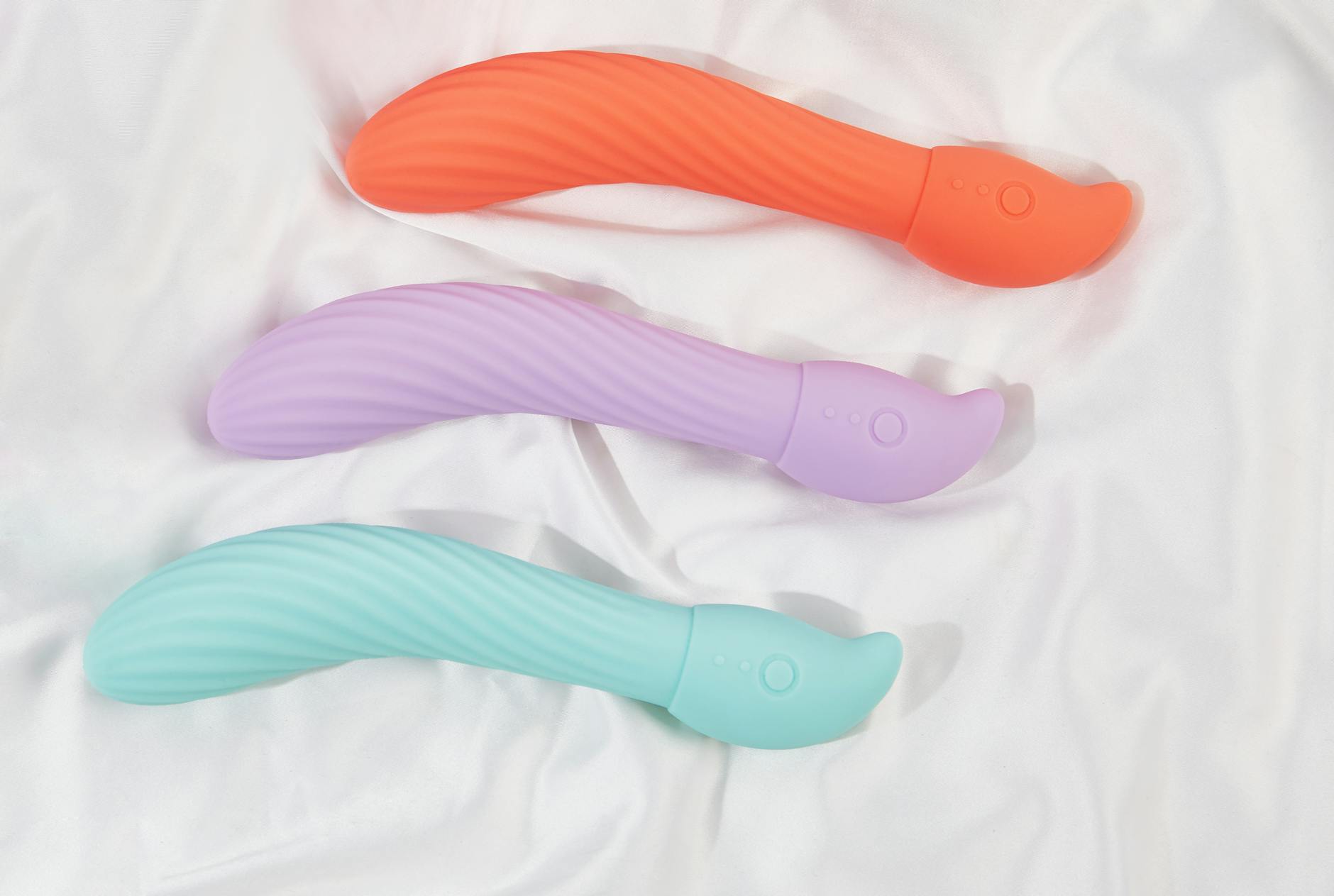
Photo by IFONNX Toys on Pexels
The mental shift that actually matters
Postpartum desire returns faster when you stop waiting for it to return passively. When you give yourself permission to explore your own pleasure separate from your partner's needs. When you stop seeing sex as one more thing you're supposed to be good at and start seeing it as something that makes you feel like yourself again.
Lemon clitoral vibrators are useful because they're efficient and because they feel different enough from partnered sex to break old mental patterns. But the real work is giving yourself permission to use them. To take fifteen minutes. To not feel guilty. To want something for yourself in a season when you're giving everything to someone else.
That permission is the tool that changes everything.
FAQ: Lemon vibrators and postpartum desire
When can I use a lemon vibrator after giving birth?
Wait until any perineal tears or c-section incisions are fully healed, which is typically four to six weeks postpartum. Your GP will let you know when penetration is safe again. External clitoral stimulation with a lemon vibrator can happen as soon as you feel physically ready and emotionally interested, though many people don't feel interested until three to six months postpartum. Listen to your body, not a timeline.
Will using a lemon vibrator make me orgasm too quickly for my partner?
Possibly. And that's not a bad thing. If you reach orgasm in five minutes alone with a vibrator and then have partnered sex, you might find partnered sex feels more relaxed because the pressure to climax is gone. Many couples find this actually improves their connection. Alternatively, you can use the vibrator after partnered sex if you didn't orgasm and want to. Order doesn't matter. Pleasure does.
Is it normal to prefer a lemon vibrator to partnered sex postpartum?
Completely normal. Sex with a partner carries mental load. You have to be present, coordinate timing, manage someone else's pleasure. When you're already touched out from parenting, that can feel exhausting. A lemon sucker vibrator requires nothing from you except your own curiosity. If you prefer it for a while, that's your nervous system asking for lower-pressure pleasure. That's not a warning sign. It's information.
Can my partner use a lemon vibrator on me if I have touch saturation?
Yes, and sometimes it's easier than partnered sex. Because you're not coordinating bodies or managing someone else's arousal, you can focus entirely on your own sensation. The intensity is usually adjustable, so you control how much stimulation you want. Some partners find using a lemon vibrator together is a way back into sexual connection that feels less demanding than traditional sex.
How does postpartum hormone recovery relate to clitoral sensitivity?
Lower estrogen means thinner tissue and sometimes reduced clitoral sensitivity. A lemon vibrator's gentle suction pattern often feels better on sensitive postpartum tissue than traditional vibration does. As your hormones stabilize (whether through breastfeeding cessation, cycling periods, or time), you might find you want different intensities. That's fine. Your preferences can shift as your body does. You get to explore what feels good at each stage.
Should I tell my partner I'm using a lemon vibrator?
That's a personal choice. Some couples benefit from that honesty. It removes secrecy and opens conversation about desire. Some people prefer privacy. Both are okay. What matters is that you're not using it to avoid intimacy with your partner permanently. If you're using it to rebuild your own sense of pleasure so you can eventually feel more connected with them, that's healthy. If you're using it to escape a relationship that needs attention, that's different. Get clarity on which one is true for you.
The long view
Postpartum desire doesn't magically return. It rebuilds. You rebuild it by noticing what your body actually wants, by using tools that feel good, and by giving yourself permission to prioritize your own pleasure even when you're busy being everything to everyone else.
A lemon clitoral vibrator is just a tool. But it's a tool that says: your pleasure matters. Your sensation matters. Your body, even postpartum and exhausted, deserves to feel good.
That's where desire comes back from. Not from obligation or trying hard. From remembering that you deserve to feel like yourself again.
Want to talk through your specific situation? Reach out to us.