How Lemon Vibrators Help When Emotional Distance Grows in Your Relationship
Here's the thing about emotional distance in long-term relationships: it doesn't always come with a fight. Sometimes you just wake up one day and realize you're sleeping next to someone you barely talk to anymore.
You still have sex occasionally. Maybe you still find them attractive. But something's missing. The real stuff. The vulnerability. The feeling that you actually know each other's inner lives. And here's where it gets confusing: physical pleasure becomes something you either avoid entirely or pursue solo, quietly, like you're doing something wrong.
I work with couples in this exact space constantly. And one of the most counterintuitive things I've learned is that exploring your own pleasure with lemon clitoral vibrators isn't a substitute for reconnection. It's often the door that opens it.
Why emotional distance changes your sexuality
Let's separate the two systems first. Your nervous system doesn't really distinguish between emotional safety and physical safety. When you feel emotionally distant from a partner, your body reads that as risk. Your arousal slows. Your pelvic floor tightens. You might want sex, but your body says no. Or you have sex but it feels mechanical, like you're performing rather than present.
What makes this particularly cruel is that many people interpret this shutdown as their own failure. "I should want them. Why don't I want them?" The answer usually isn't that desire is gone. It's that the nervous system is protecting you.
This is why so many people in emotionally distant relationships either avoid sex entirely or seek it outside the relationship. Neither solves the actual problem. They're both just symptoms of a nervous system that doesn't feel safe.
How solo exploration rewires that safety
When you use a lemon vibrator alone, you're not just experiencing pleasure. You're teaching your nervous system something critical: that you're safe enough to be vulnerable. That your own desire matters. That pleasure doesn't require performance or approval.
This sounds simple, but it actually rewires how you show up in your relationship. People who reclaim their own sexuality tend to show up with more honesty. Less resentment. More clarity about what they actually want versus what they think they should want.
I've watched clients use lemon clitoral vibrators solo for a few weeks and then suddenly have completely different conversations with their partners. Not about the vibrators necessarily. About themselves. About what they need. About the fact that they're not actually fine with how things are.
Sometimes that leads to reconnection. Sometimes it leads to deeper honesty about whether the relationship can actually shift. Either way, it's progress.
The specific advantage of air-suction design when you're emotionally blocked
Most people who are emotionally distant from their partners also experience some numbness during partnered sex. Direct stimulation can feel too intense or weirdly disconnected. A lemon vibrator works differently. The suction mechanism creates a gentler, more diffuse sensation that doesn't require the same mental presence as friction-based toys.
What this means practically: you can use it while partially present. While your brain is processing other stuff. While you're rebuilding trust in your own body. And then gradually, as your nervous system learns that pleasure is safe, you can move into deeper presence.

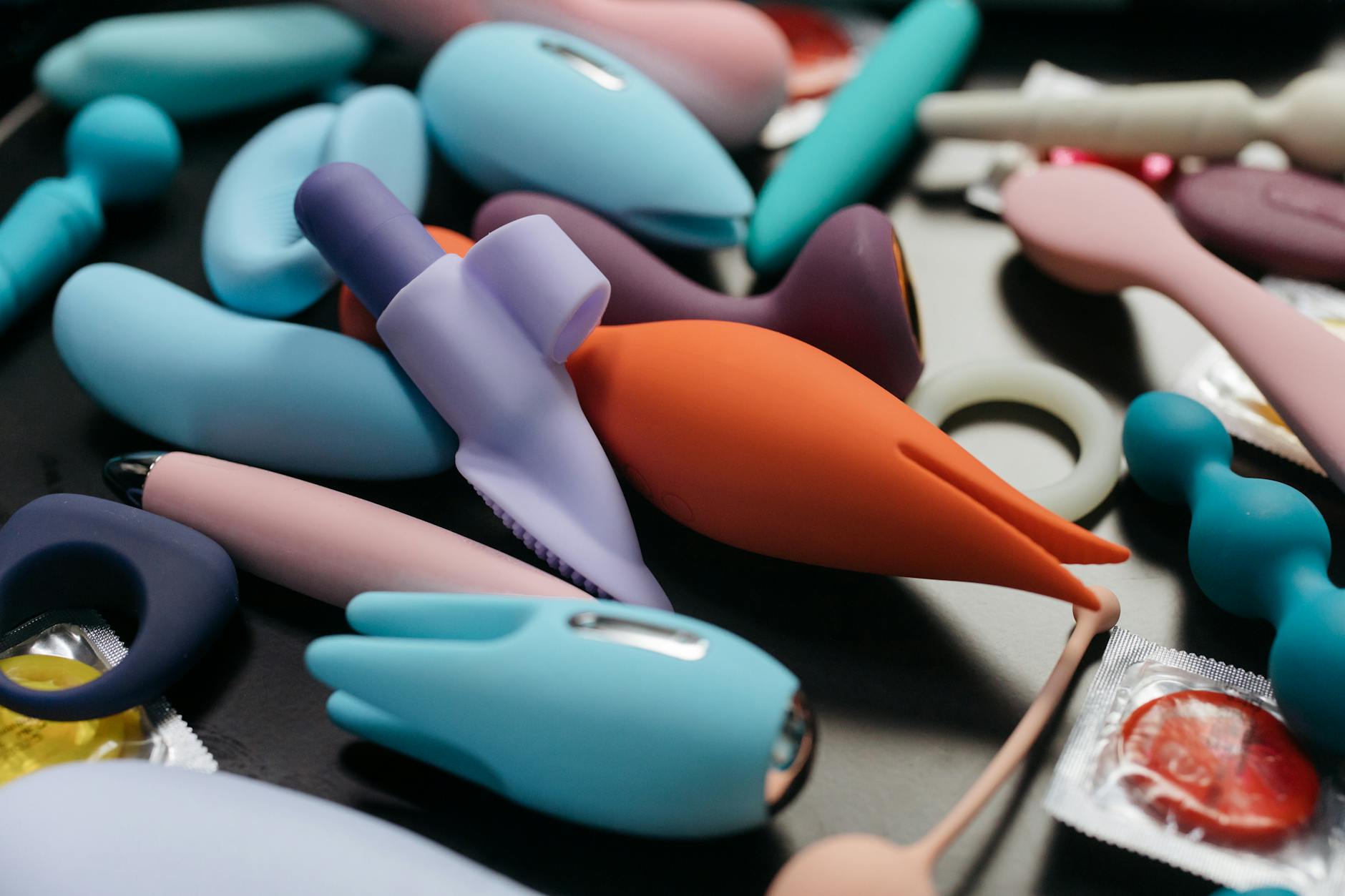
Photo by cottonbro studio on Pexels
Starting with solo exploration before reintroduction
If you want to eventually reintegrate pleasure with a partner, solo practice first is crucial. This isn't about hiding anything. It's about rebuilding your own baseline.
Spend 2-3 weeks using your lemon vibrator alone, without any pressure to involve your partner. Notice what patterns emerge. Do you feel more relaxed afterward? More connected to your body? More clear about what you actually want? These observations matter.
Then when you do decide to explore with a partner, you're coming from a place of "I've reconnected with my own pleasure, and I want to share this" rather than "I'm broken and you need to fix me." That's a completely different energy.
How to talk about it with your partner
Honesty here matters more than technique. Most people delay this conversation because they're afraid of hurting their partner or triggering defensiveness. But staying silent actually feeds the distance.
Here's what I usually recommend: pick a calm moment, not during or immediately after an attempted intimate moment. Say something like: "I've realized I've disconnected from my own pleasure, and that's been affecting us. I want to explore that solo for a bit, and I'm also thinking about what reconnection might look like for us together."
Notice what that does: it frames your solo exploration as something that's actually about the relationship, not away from it. Because it genuinely is.
Some partners will want to be involved immediately. Others will need space to process. Both are normal. The key is that you're being transparent about what you're doing and why.
When emotional distance actually needs professional support
I want to be clear: lemon vibrators are a tool, not a therapist. If the emotional distance comes from betrayal, ongoing contempt, or a fundamental mismatch in values, solo pleasure isn't going to fix that.
But if the distance comes from disconnection that could shift with honesty and presence, then yes. Reclaiming your own sexuality often opens that door.
If you're not sure which category you're in, that's also information worth taking seriously. Sometimes that uncertainty means it's time to talk to a couples therapist. That's not failure. That's wisdom.
The ripple effect of reconnecting with yourself
Here's what I've noticed happens when someone in an emotionally distant relationship starts exploring their own pleasure with intention: they become less resentful. More honest. More willing to name what they actually want instead of performing what they think they should want.
Sometimes that leads to reconnection with the partner. Sometimes it leads to the decision that the relationship needs to shift. Sometimes it leads to the discovery that the distance was partly self-imposed, and reconnection is actually possible.
I've never seen it lead somewhere worse. Because clarity, even difficult clarity, is better than drift.
People also ask
Can using a lemon vibrator solo damage your relationship?
No. What damages relationships is secrecy and resentment. Solo pleasure with tools like lemon clitoral vibrators only damages a relationship if there's already a foundation of shame around sexuality. If you can talk about it with your partner, it's actually an opportunity for more honesty, not less.
How do I know if my emotional distance is fixable?
It's worth exploring if you still care about the person but have stopped being vulnerable with them. If the distance comes from active hurt or betrayal that hasn't been addressed, that requires specific repair work, often with a therapist. But pure drift, the kind that happens from neglect rather than injury? That's often very fixable if both people want to fix it.
Should I use a lemon vibrator with my partner after using it solo?
Maybe, eventually. But start solo first. The point of solo exploration is to rebuild your own baseline and clarity. Once you have that, you can decide what you actually want to share. Some people find that using a lem vibrator together is incredibly connecting. Others prefer to keep that separate. Both are fine.
What if my partner gets upset about me using a vibrator?
That's worth taking seriously, but not necessarily as a dealbreaker. Sometimes partners react defensively because they're afraid of being inadequate or losing you. Those fears are real and worth addressing. But a partner who wants to control your solo pleasure is showing you something important about their own insecurity. That's data you need to work with, ideally with professional support.
How long does it take to feel reconnected after solo exploration?
There's no timeline. Some people feel a shift in their own body after a few weeks of consistent solo pleasure. Reconnection with a partner takes longer. Usually 2-3 months of honest conversation and presence before real shifts happen. But you'll notice changes in yourself much faster.
Is emotional distance always about the relationship?
Not always. Sometimes it's about depression, burnout, or unprocessed grief. Sometimes it's about sex drive mismatches that have nothing to do with emotional safety. That's why understanding what's actually happening is the first step. If you're unsure, talking to someone trained in these dynamics is worth it.
Emotional distance doesn't have to be permanent. It usually just needs honesty, presence, and sometimes permission to explore what you actually want. Lemon vibrators can be part of that permission. But the real work is the conversation you have with yourself first, and then with your partner.
Sources
Gottman, J. M., & Silver, N. (2015). The seven principles for making marriage work: A practical guide from the country's foremost relationship expert. Harmony.
Perel, E. (2018). Mating in captivity: Reconciling the erotic and the domestic. Harper Paperbacks.
Johnson, S. M. (2019). Attachment theory in practice: Emotionally focused therapy (EFT) with individuals, couples, and families. Guilford Press.
Brotto, L. A., & Kingsberg, S. A. (2023). Assessment and treatment of sexual function in women. The Journal of Sexual Medicine, 20(3), 411-428.
Van der Kolk, B. (2014). The body keeps the score: Brain, mind, and body in the healing of trauma. Penguin.