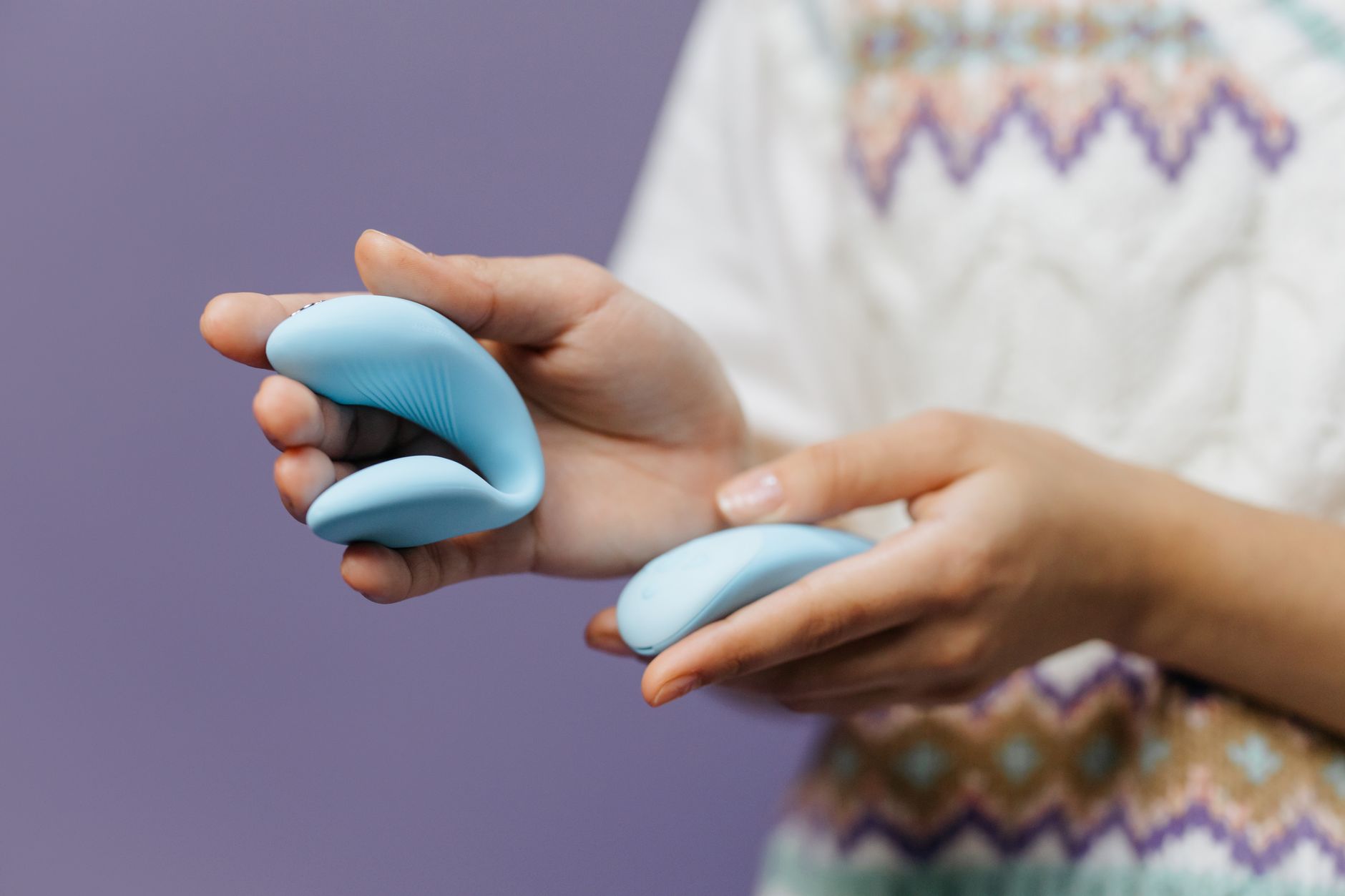
Let's be real about what solo pleasure actually means
Here's the thing nobody talks about in relationship advice: the best thing you can do for partnered intimacy sometimes has nothing to do with your partner. It's about knowing your own arousal so thoroughly that you stop waiting for someone else to unlock it.
Most of my clients come to me with a version of this problem. They describe feeling "touched out," "obligated," or "unable to relax enough to feel anything" during sex with a partner. Then I ask: "When was the last time you explored your own pleasure alone?" The answer is usually silence.
That gap matters. And lemon vibrators, specifically, are one of the cleanest ways to close it.
Why partnered pleasure can actually suppress your own arousal
This isn't about your partner being bad at sex or you not loving them. It's about attention architecture. When you're with someone else, your brain is dividing resources. You're tracking their pleasure, their rhythm, their breathing, whether they seem happy. You're performing a version of yourself.
When you're alone, something shifts. Your nervous system stops auditing itself. The prefrontal cortex, the part of your brain that worries about performance, quiets down. Your arousal doesn't have to make sense to anyone else.
Most people with vulvas need this mental space to orgasm reliably. A study in Archives of Sexual Behavior found that women who masturbate regularly report higher sexual satisfaction in partnered sex. Not lower. Higher. Because they know what actually works for their body.
That knowledge is the key. And it's not something you can learn while also managing someone else's experience.
The pressure paradox
Partners often mean well. They ask "Did you come?" or suggest new positions or buy toys hoping to help. But that intention, however loving, can land as pressure. Suddenly your pleasure becomes a thing you're supposed to produce on demand, rather than something you're exploring because it feels good.
With a clitoral vibrator and the door closed, that pressure evaporates. You're not trying to come. You're not trying to prove anything. You're just touching yourself with a tool that actually works, and seeing what happens.
This is especially true if you've spent years in a relationship where your pleasure got smaller and smaller. A lemon clitoral vibrator like the suction-based models from Get Lemon Toy works in a fundamentally different way than a partner's hands or a typical vibrator. The sensation is precise, consistent, and doesn't require you to manage anyone else's stamina or technique. You control the intensity, the speed, the moment you stop. That autonomy is not a luxury. It's healing.
What changes when you have reliable solo pleasure
Once you know how to bring yourself to orgasm alone, three things shift in partnered intimacy.
First, you stop resenting your partner for not being able to read your body. You know your body now. You can actually guide them. "Like this," you can say, "but slower," because you've mapped the difference.
Second, you stop treating orgasm as the only marker of good sex. Once you can reliably get there alone, partnered sex becomes less about outcome and more about connection. You actually have room to enjoy the parts that don't lead to orgasm.
Third, you re-enter partnered intimacy from a place of choice, not desperation. You're not coming to the bedroom hoping someone will finally unlock your pleasure. You know you can do it yourself, which paradoxically makes you way more present with a partner. You're there because you want to be, not because you need to.
How to start
Honestly, the barrier to solo exploration isn't usually the tool. It's the permission.
You deserve pleasure that's not productive, not impressive, not for anyone else's benefit. You deserve 20 minutes with the door locked and your phone across the room. You deserve to find out what actually feels good instead of what you've been taught should feel good.
A lemon vibrator makes this easier because it's designed for external clitoral stimulation. You don't need to think about depth or angle. You hold it against your clitoris and let the suction do the work. No performance, no guessing.
Start with the lowest intensity. Give yourself at least 15 minutes. Arousal builds differently when you're alone than when a partner is involved, and slower is almost always better. If nothing happens the first time, that's normal. Your body might need a few sessions to trust that this is actually for you.
The conversation with your partner
If you're in a relationship, this doesn't have to be secret, but it also doesn't have to be a big declaration. You might say something like: "I want to explore solo pleasure more. I think it'll help me know my body better and bring that to us." Most partners respond well to this because it's framed as something that benefits both of you, which it does.
Some couples find that knowing their partner masturbates actually makes partnered sex hotter. Others prefer to keep it private. Neither is wrong. The point is that your solo pleasure is yours to decide about.
What lemon clitoral vibrators actually do differently
Most vibrators vibrate. Lemon toys use gentle suction instead, which mimics the sensation of oral sex in a way that's consistent and adjustable. That matters because suction doesn't desensitize you the way some vibrations do. You can use it for longer without that numb feeling. And the sensation is broader, affecting the entire clitoral complex, not just the tip.
For solo exploration, this means you can actually feel your arousal building over time. You're not chasing a specific sensation. You're discovering what your body responds to.
The relationship payoff
When you've had reliable solo orgasms, you show up differently in partnered intimacy. You're less frustrated, less resentful, less hungry for your partner to finally make it work. You're actually able to receive pleasure instead of chasing it.
This isn't about replacing partnered sex. It's about building a foundation so solid that partnered sex becomes something you want, not something you need.
People also ask
Is it normal to prefer solo pleasure over partnered sex?
Completely normal. Many people find solo pleasure more reliable and less emotionally fraught than partnered sex. That doesn't mean partnered sex is bad or that your relationship is failing. It usually means solo pleasure removes variables that might be getting in the way of arousal. A therapist can help you figure out why, and whether you want to address it.
Will using a lemon vibrator make partnered sex feel less satisfying?
Actually, the opposite. People who masturbate regularly report higher satisfaction in partnered sex. Knowing what feels good to your body makes partnered sex more satisfying because you're not frustrated that your partner isn't hitting the right spot. You know the spot, you know how to guide them, or you know it might feel different with a partner and that's okay.
How often should I be exploring solo pleasure?
There's no "should" here. Some people find that weekly solo time works best. Others prefer daily. Some people have phases where they're into it and phases where they're not. The only rule is that it should feel good and not like an obligation. The second it becomes a chore, you've missed the point.
Can I use a lemon clitoral vibrator if I'm very sensitive?
Yes, and actually it might be easier than you think. Start at the lowest suction setting and give yourself permission to stop whenever. Because the sensation is suction rather than vibration, it often feels less intense to people who are sensitive. The key is control. You're holding the tool. You can pull away instantly if it's too much.
Should I tell my partner I'm using a lemon vibrator solo?
That's entirely your call. Some people share, some keep it private. If you do tell them, frame it around your own pleasure and exploration rather than anything missing in your relationship. Most partners appreciate knowing because it explains a shift in your mood or your interest in partnered sex.
What if I can't orgasm even alone?
That's not a failure. Orgasm is not the point of solo pleasure. The point is knowing your body, reducing performance pressure, and figuring out what actually feels good when nobody else is watching. Some people spend months just exploring sensation with no orgasm in sight, and that's completely valid. If you want to dig deeper, a sex therapist can help.
The real benefit
Solo pleasure with a lemon vibrator isn't about replacing your partner or proving something. It's about reclaiming your own arousal as something that belongs to you alone. That foundation changes everything. It changes how you feel in your body, how you show up in intimacy, and how much you need your partner to validate your sexuality.
Your pleasure is not a performance. It's not for anyone but you. And once you actually believe that, everything shifts.
If you're curious about exploring solo pleasure for the first time, or you've drifted away from it, that's exactly where to start. You deserve that time. You deserve that knowledge. You deserve pleasure without pressure.