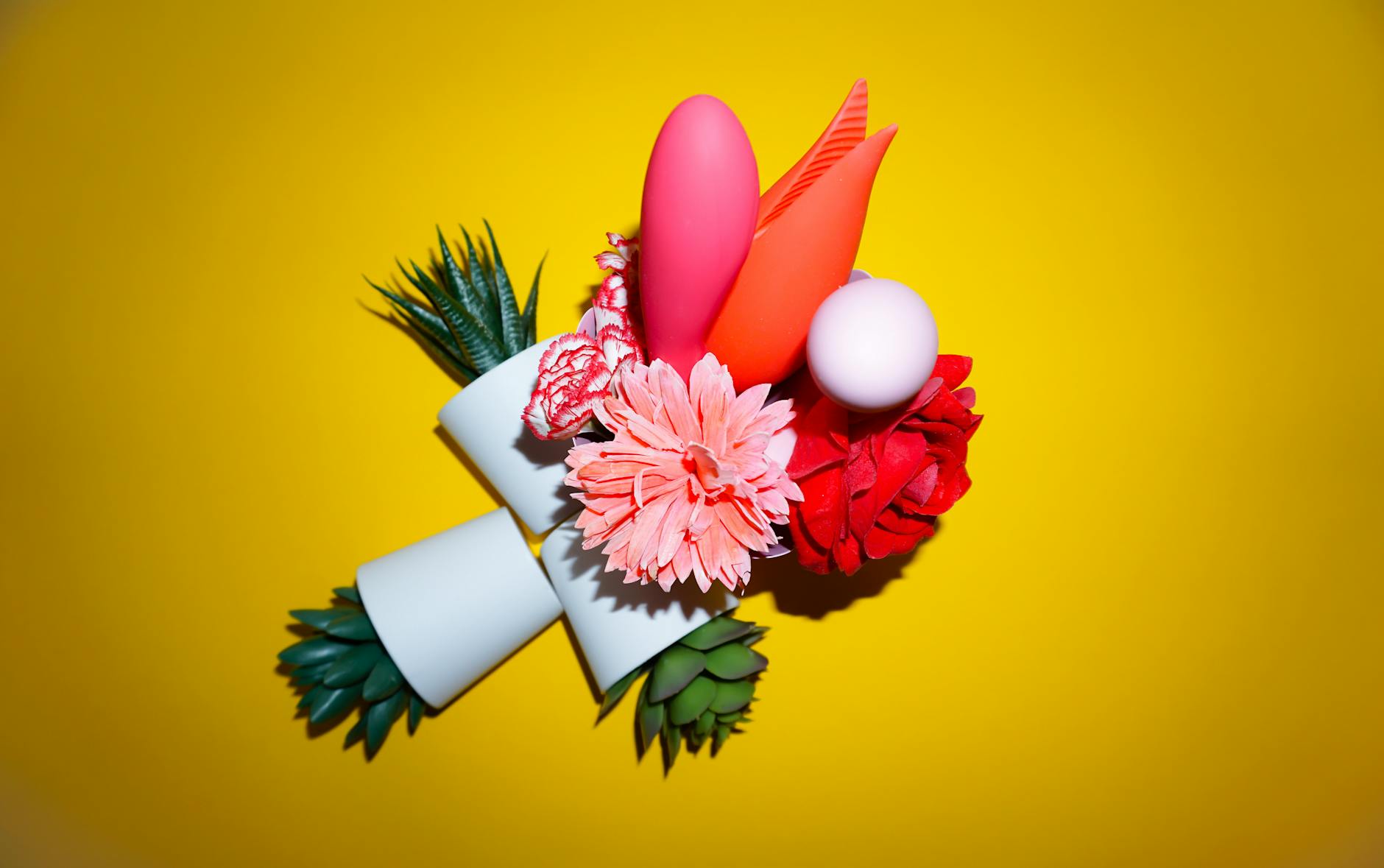
The shift nobody warns you about
You go off hormonal birth control and suddenly everything feels... different. Not necessarily bad. Just different. Your partner notices it. You notice it. And there's this weird gap between what you expect to feel and what you're actually experiencing down there. Here's the thing: that gap is real, it's physiological, and it's temporary. It's also one of the most common reasons people reach for lemon clitoral vibrators after years of not needing one.
Before we talk about solutions, let's talk about what's actually happening in your body when you quit the pill, the patch, or the ring.
How birth control changes your baseline sensation
Hormonal contraceptives work by suppressing your natural hormone cycle. They keep estrogen and progesterone at steady, artificial levels. This stability messes with a lot of things. Your natural testosterone production drops. Estrogen levels plateau when they should be fluctuating. The vaginal tissue gets less blood flow. Lubrication patterns shift. The nerve sensitivity in your clitoris and vulva recalibrates to this new hormonal environment.
Here's what most people don't realize: your body adapts to this. After months or years on hormonal birth control, your baseline for arousal, lubrication, and orgasmic response gets recalibrated around the artificial hormone levels. It's not that sensation disappears. It's that your nervous system learns to work with a different chemical baseline.
Then you stop. Your real hormone cycle comes roaring back. Testosterone surges again. Estrogen fluctuates the way evolution designed it to. Your vaginal tissue thickens and thins across the month. Blood flow normalizes. And your nervous system has to relearn how to respond to stimulation in this new (actually, old) hormonal environment.
The sensation lag: what you're actually experiencing
Most people describe this as numbness, but it's not quite that. It's more like your previous settings don't match the equipment anymore. You know how to get off on your old settings. Your partner knows how to touch you in ways that used to work. But now it takes longer. It requires more pressure. Sometimes the sensation feels distant or muted compared to what you remember.
This typically lasts two to four months, though some people notice shifts for six months or longer. Why the variation? Hormones take time to stabilize. Your cycle needs several months to find its rhythm again. Stress, sleep, and underlying health conditions all affect how quickly your body re-acclmates.
The good news: this is not permanent. Your sensation will return. It'll probably feel even better than before because you're experiencing your body's authentic hormone response for the first time in years.
The faster good news: lemon vibrators help bridge the gap while you're waiting.
Why lemon sucker technology works during this transition
Lemon clitoral vibrators (and specifically air-suction toys like the Lem) work differently than traditional vibration. Instead of buzzing against tissue, they create gentle suction and release patterns that stimulate nerve endings without requiring the same level of baseline sensitivity to feel something.
Think of it this way: if your nervous system temporarily needs more signal to register pleasure, air-suction provides a different channel for that signal. The suction sensation doesn't depend on the same nerve pathways as direct vibration. It wakes up the clitoris through a different mechanism.
This is why people recovering from birth control or antidepressants often report that lemon vibrators help when pleasure feels dampened. The suction pattern is novel enough that it bypasses the adaptation your nervous system developed on hormonal contraception.
The practical path back to feeling like yourself
Here's what I recommend to people navigating this transition.
Start with lower intensity. If you're used to strong vibration, begin at pattern one or two on a lemon clitoral vibrator. Your tissue and nerves are recalibrating. Give them permission to wake up gradually.
Budget more time for arousal. You might need 15 to 20 minutes of buildup instead of five. This is normal. Your hormones are cycling again, which means arousal takes longer to build on some days of your cycle and faster on others.
Separate partnered sex from solo exploration. When you're figuring out your new body, do it alone first. Use a lemon sucker or other clitoral vibrator to learn what feels good now. Once you've got that mapped, bring it back into partnered sex if you want to. This removes the pressure of performing while you're adjusting.
Expect cyclical variation. Now that you're off hormonal birth control, your sensation will actually change across your menstrual cycle. This is a feature, not a bug. During your luteal phase (the two weeks before your period), you might feel less sensation and need more stimulation. During your follicular phase (after your period), sensation often feels sharper and more responsive. Track this for a few cycles so you understand your new pattern.
The partner conversation that matters
If you have a partner, this is worth discussing directly. Not during sex, but during a regular conversation. "My hormones just came back after years on birth control. My body's going to feel different to touch for a bit. I might need more direct stimulation. Let's explore together."
Most partners appreciate the heads-up. It reframes the sensation change from "something's wrong" to "we're adjusting to something new together." And it opens the door to introducing lemon vibrators into your partnered sex if you want to. Some couples find that a lemon clitoral vibrator becomes part of their routine during this transition period and stays part of it afterward. Others use it temporarily and move on. Both are fine.
When sensation doesn't return
If you're six months off hormonal birth control and sensation still feels significantly dampened, it's worth checking in with your doctor. Sometimes what looks like a normal adjustment period is actually a sign of something else: hormonal imbalance, thyroid dysfunction, nutritional deficiency, or underlying pelvic health issues that the birth control was masking.
You deserve to feel pleasure again. If the timeline seems long, that's worth investigating. A good gynecologist or sexual medicine specialist can run basic bloodwork and help you figure out what's actually happening.
The upside nobody talks about
Here's what I see repeatedly in my practice: people come off hormonal birth control, navigate the awkward sensation-change period with support and tools like lemon vibrators, and then report that their orgasms feel stronger and more varied than they did even before starting contraception.
Why? Because you're experiencing your body's authentic arousal response for the first time in years. That includes the full spectrum of hormone fluctuation. Some days you'll feel like sex right away. Other days you'll need more time and more direct stimulation. Your orgasms might feel different across your cycle. Your desire will have a rhythm again instead of a flat line.
That's not a problem. That's freedom.
People also ask
How long does it take for sensation to return after stopping birth control?
Most people notice significant improvement within two to four months. Full recalibration can take six months or longer. Every body is different. Stress, sleep quality, and your overall health affect the timeline. If you're still dealing with significant numbness or dampened sensation after six months, check in with a healthcare provider to rule out other causes.
Can I use a lemon vibrator while I'm still on birth control?
Absolutely. Some people use lemon clitoral vibrators regularly regardless of contraception status. The benefit of introducing one during the transition off birth control is that it gives your nervous system a different type of stimulation to work with while your hormones are restabilizing. But there's no reason to wait until you're off hormonal contraception to try one.
Will my arousal eventually feel the same as it did before I started birth control?
Not exactly the same, because you might not remember what your unmedicated arousal felt like if you've been on hormonal contraception for years. But yes, your arousal will return to its baseline pre-pill state. With one difference: now you'll understand that your body has a natural rhythm. You'll notice when you're more receptive at certain points in your cycle. You might actually like that variation.
Should I tell my partner my sensation has changed?
Yes. This isn't something to hide. You're not broken. Your hormones are restabilizing. A partner who cares about your pleasure will want to know so they can adjust their approach temporarily. If you're uncomfortable bringing it up, start with something like: "My body's adjusting after coming off birth control. It might take a few weeks for things to feel normal again." That's it.
Can I introduce a lemon vibrator to partnered sex while sensation is still changing?
Completely. In fact, it often helps both partners feel less frustrated. Instead of "something's not working," it becomes "let's try this together." A lemon sucker or clitoral vibrator can be part of foreplay or penetrative sex. It's not a replacement for your partner's touch. It's an addition.
Do I need to use a lemon vibrator forever after stopping birth control?
No. Some people use one during the transition period and then don't need it. Other people discover they enjoy clitoral vibrators and keep using them long-term. Neither choice is right or wrong. Your body will tell you what it needs.
Coming off hormonal birth control is a real physiological shift. Sensation changes. Arousal patterns shift. Your body literally relearns how to respond to stimulation. That's normal. That's temporary. And you don't have to navigate it alone or in silence. Tools like lemon vibrators, honest conversations with partners, and time are what get you through to the other side, where your pleasure is yours again, fully and authentically.