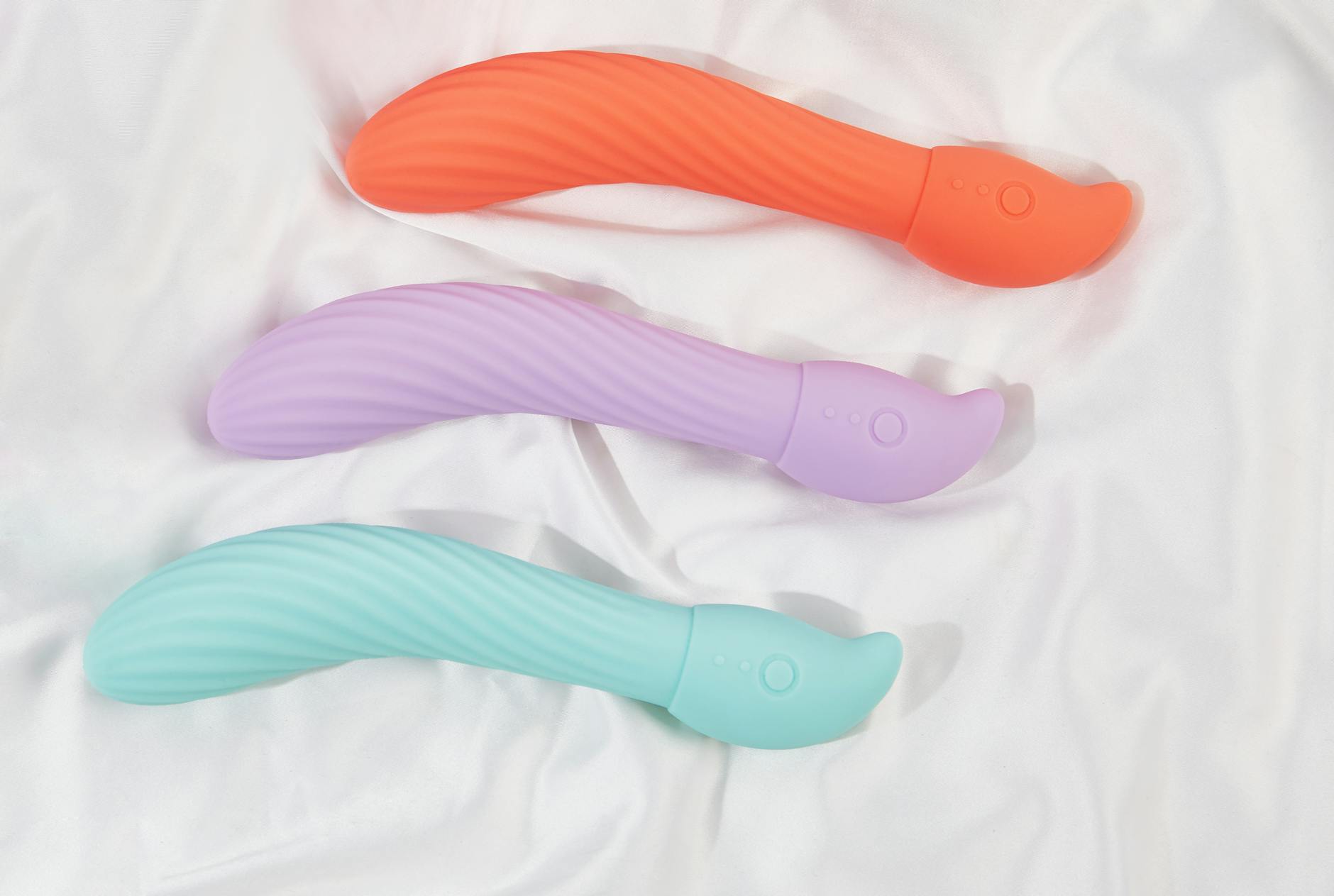
Let's be real about the learning curve
You bought a lemon vibrator. You turned it on. Maybe nothing happened. Or maybe something happened but it didn't feel like what you expected. That's the honest part nobody talks about: these toys aren't intuitive just because they're designed to feel good. There's technique involved. And honestly, that's what makes them so effective once you know what you're doing.
I've worked with hundreds of people navigating pleasure, and the gap between "I have a clitoral vibrator" and "I know how to use this thing" is where most people get stuck. This guide fills that gap.
Why the settings matter more than you think
Most lemon vibrators and clitoral vibrators come with multiple intensity levels and patterns. The temptation is to jump straight to maximum. Don't. Here's why: your nerve endings adapt fast. If you start at level 5, by the time your body is truly aroused, you'll already be in the dead zone where sensation feels muted rather than intense.
Start at level 1 or 2. Spend five to ten minutes there, letting your body warm up. The clitoris is actually an organ with internal structure, and it needs blood flow and time to become fully engorged. This isn't about patience. It's about physics. When you finally move to level 3 or 4, the jump feels electric instead of overwhelming.
Pattern cycling works the same way. If your lemon clitoral vibrator has pulse, wave, or custom patterns, don't stay on one. Switch every 30 seconds to two minutes. Your nerve endings are wildly good at tuning out constant input. Variety keeps the sensation sharp.
Positioning and angle are everything
Here's where most people miss the mark. The clitoris isn't a flat target. It's a structure with a visible head (the glans) and a body that extends internally. Direct stimulation on the glans feels intense but can become uncomfortable fast. Angled stimulation, slightly off-center or around the sides, often feels better and sustains longer.
Experiment with these positions. Start lying on your back, knees bent slightly, feet flat. Hold the vibrator at roughly a 45-degree angle, angling slightly upward. This isn't the angle you might expect from watching other people's descriptions online. Move the vibrator in small circles or gentle up-and-down motions rather than keeping it static. This distributes sensation across a wider nerve network and typically builds arousal more gradually.
Side-lying can work beautifully too, especially if direct stimulation on your back feels too intense. Lying on your left side with your right leg bent gives you easy access and a different angle entirely.
The most underused position: standing or sitting upright, leaning slightly back against a wall or headboard. You can control pressure better this way, and for people who tense up lying down, the slight difference in body position changes everything.
Pressure and motion matter as much as the toy itself
Lemony tools like the clitoral vibrator in Hello Nancy's collection are built for light to medium pressure. You don't need to press hard. In fact, harder pressure often numbs sensation rather than amplifying it. Try holding the vibrator so it makes contact but with almost no applied force. You should barely feel your hand doing work.
Motion helps. Small circles. Gentle rocking side to side. Slow up-and-down pulses. These motions combine the vibration with mechanical stimulation in a way that static contact rarely achieves. If something feels stuck or plateauing, the answer isn't usually more vibration. It's usually a different motion or angle.
Many people discover that combining vibration with penetration (fingers, a partner, or another toy) creates sensation that's bigger than either alone. This works because different nerve endings are firing. The internal sensations complement the external vibration instead of competing with it.
Building your personal technique through exploration
The sexiest thing about a lemon sucker or any good clitoral vibrator is that it's a tool for learning your own body. No two people respond to the same setting or angle exactly the same way. This matters. Your baseline might be someone else's too-intense. Their perfect sweet spot might feel like nothing to you.
Start a mental note or actual note of what works. What level? What pattern? Angled how? How much pressure? Texture of movement? Alone or combined with something else? After three or four uses, patterns emerge. You'll start to notice that you're consistently returning to level 3 with the pulse pattern, angled slightly to the left. Great. That's your baseline. Now you know where to start the next time instead of fumbling in the dark.
Over time, your preferences will shift. Arousal level changes them. Hormonal cycles might change them. Stress, sleep, what you've eaten, whether you've exercised. Your body isn't a machine with one setting. It's more like an instrument that sounds different depending on how it's tuned. Learning your own technique means staying curious instead of locked into one "correct" way.
When you're with a partner
If you're exploring a lemon vibrator with someone else, communication shifts from optional to essential. Not because sex needs to be awkward and talk-y. It doesn't. But because your partner can't feel what's happening inside your body. They're working blind otherwise.
The simplest approach: start with a non-verbal signal system. If something feels incredible, keep one hand on your partner's arm or hand. If you need them to ease off or switch patterns, a gentle squeeze or verbal "pause" works. Once you both know you're not going to get defensive or weird about feedback, you can literally just say "a bit lower" or "slower pattern" the way you'd ask for a shoulder massage to shift up two inches.
Many couples find that combining a lemon clitoral vibrator with partnered penetration or manual stimulation creates an experience that neither partner could create alone. The vibrator handles external sensation while fingers or a partner's body creates internal or additional external sensation. This requires coordination and communication, but that conversation itself builds intimacy.
One note: if you're the partner using the vibrator on someone else, watch their face and body more than the toy. Breath changes. Pelvic floor tension. Small shifts in positioning. These signals matter infinitely more than whatever setting you're on.
Common friction points and how to solve them
Nothing's happening. You've tried a few times and you're not feeling much. First question: are you actually aroused, or are you just turning on the vibrator cold? This is the mistake I see most often. Arousal needs building blocks. Mental focus. Breathing. Maybe some initial manual stimulation or external rubbing without the vibrator first. The vibrator amplifies arousal. It doesn't create it from zero.
It feels too intense. This usually means you started too high or you're pressing too hard. Drop to level 1. Reduce pressure to almost nothing. Give it five minutes instead of 30 seconds. If direct clitoral stimulation is still overwhelming, try stimulating the mons pubis or the labia instead, letting the vibration's surface sensation do the work before you go direct.
You're losing sensation mid-session. This is nerve adaptation. Switch patterns. Switch angle. Switch position. Change the pressure. Give your body a 30-second break. Sometimes the solution is stopping, breathing, getting a glass of water, and starting again in five minutes with fresh sensation.
You're finishing too quickly or not finishing at all. Both are normal. Speed is about arousal level, how much stimulation you're getting, and what your nervous system needs in that moment. Some sessions are sprints. Some are longer journeys. There's no "right" amount of time. The pressure to finish is usually what prevents finishing. Let that go.
FAQ: Your actual questions answered
How long should I use a clitoral vibrator in one session?
There's no time limit. Some people reach orgasm in three minutes. Others need 20. Many explore pleasure without chasing orgasm as the finish line, which often feels better overall. What matters is that you're not numb or sore afterward. If you're sore after 30 minutes of intense direct stimulation, you're probably pressing too hard or staying at too high an intensity. Back off next time. Pleasure shouldn't hurt.
Can I use a lemon vibrator every day?
Yes. Using a vibrator daily won't numb you permanently or create dependency, despite what older advice says. The only caution: if you use only vibration and only intense vibration, you might find that partnered touch feels lighter than you want. That's easily solved by varying your approach. Mix vibration with manual stimulation. Some days solo, some days partnered. Change settings and angles. Variety keeps sensation sharp.
Should I use lubricant with a lemon sucker or clitoral vibrator?
Water-based lube is optional but often helpful, especially if you're exploring for longer sessions or if direct clitoral contact feels dry. It reduces friction, which can feel better and reduces any risk of irritation. It also helps the vibrator glide smoothly if you're doing motions rather than staying static. Silicone-based lubricants can damage silicone toys, so stick with water-based.
What if I don't finish with a vibrator but I do with my fingers?
That's completely normal. Your fingers provide texture and warmth that a toy doesn't. Some people need that combination: fingers for the emotional and textural component, vibrator for the intensity. Or you might prefer fingers during this phase of your life and vibrators in another. Pleasure isn't monogamous. Use what actually works.
How do I know if I'm using the toy correctly if nothing's happening?
First, give yourself permission to not feel something. Some bodies respond to vibration instantly. Others need time to warm up or respond better to different stimulation. Second, read your device's guide if it came with one. Some lemon vibrators have specific usage recommendations. Third, check that you're actually aroused before expecting sensation to feel significant. Fourth, try different angles, pressures, and patterns before concluding it's not for you. If after genuine exploration nothing clicks, that's fine too. Not every toy is for every person.
Can I use a clitoral vibrator during penetrative sex with a partner?
Absolutely. Many people use a vibrator during partnered penetration because it targets external sensation that penetration alone doesn't always reach. Communication with your partner about comfort and positioning helps. Some positions work better than others. Lying on your back with your partner on top, or side-by-side, typically makes it easier than positions where access is blocked.
The real secret
Using a lemon vibrator well isn't about technique. It's about permission. Permission to explore without judgment. Permission to change your mind mid-session. Permission to spend 20 minutes getting to know what your body actually wants instead of rushing toward the finish line. Permission to use it in ways the manual never mentioned because you discovered something that works for you. That's where the magic lives.
Your pleasure matters. Not as something you'll get to eventually. Not once you've earned it. Now. This is worth learning well.
If you're new to clitoral vibrators and want a deeper foundation, our buying guide covers how to choose the right toy for your body. Or if you've got questions about care, sensitivity, or what makes Hello Nancy's approach different, reach out at /contact. I'm here to help.