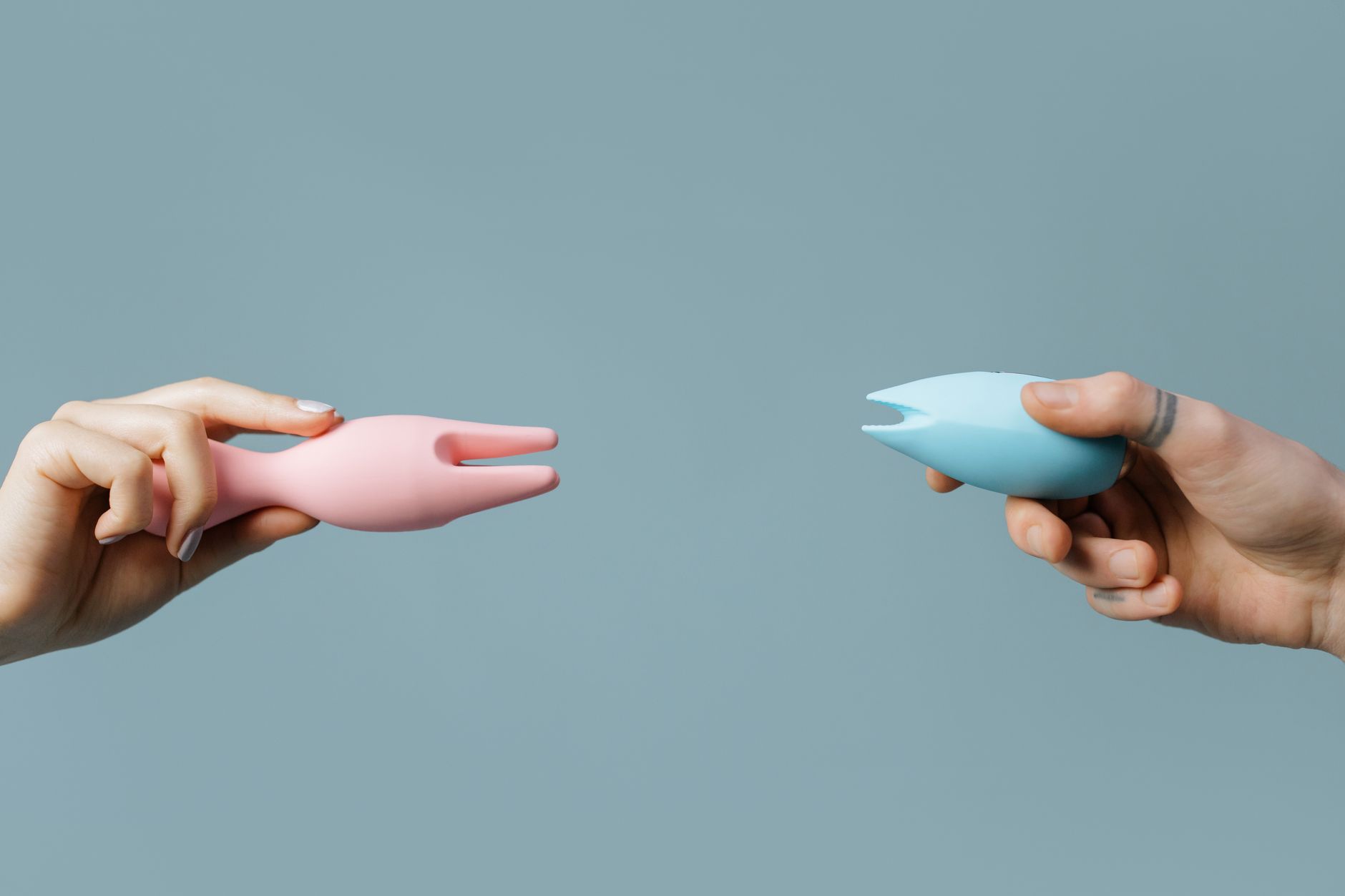
Here's what happens after a decade (or more) together
You're having sex, and it's... fine. Not bad. Not good. Your partner touches you and you feel it physically, sure, but there's no electricity. No anticipation. The sensation is there, but something between the touch and your brain has gone quiet. This isn't about age or hormones or attraction fading. It's about a specific kind of numbness that long-term relationships can create. Repeated touch loses its novelty. Your nervous system stops paying attention.
The good news: your sensitivity isn't broken. It's just asleep. And lemon clitoral vibrators are one of the fastest ways to wake it back up.
Why long-term touch stops registering
There's a neurological principle called habituation. Your brain filters out stimulation it predicts. If your partner touches you the same way, in the same places, at the same rhythm every time, your nervous system learns to classify that input as "background." Not worth processing. This isn't a reflection on your partner or your relationship. It's how brains work.
After years together, you also lose the nervous system activation that comes with novelty. Early on, touching someone new floods your system with dopamine and noradrenaline. That wears off. Permanently. But what replaces it should be deeper pleasure, not numbness. Often it's just neutral.
The physical sensation might still be pleasant if you pause and think about it, but you're not feeling it in real time. You're thinking about it instead of experiencing it. That gap between sensation and awareness is where numbness lives.
How lemon vibrators interrupt the numbness pattern
A lemon clitoral vibrator works differently than a partner's hand. The sensation is novel, which forces your nervous system to pay attention. The rhythm is consistent but the intensity is adjustable in ways touch alone isn't. This combination does something specific: it retrains your brain to notice sensation again.
When you introduce a lemon vibrator to solo play, you're working in a private space where there's no performance aspect, no partner's rhythm to accommodate, no learned expectations about how this "should" go. That freedom matters. Your nervous system can actually focus on what feels good instead of managing the relationship dynamic at the same time.
Clitoral suckers like the Lemon work especially well for this because they create a different sensation than vibration alone. The suction mimics the pattern of manual stimulation but with more sustained intensity. After years of predictable partner touch, that difference wakes things up quickly.
The solo practice that matters most
Before you bring a lemon vibrator into partnered sex, spend time with it alone. This isn't about orgasming faster. It's about reestablishing the pathway between sensation and awareness. Here's what actually helps:
Set a full 20-30 minutes aside. Start at lower intensity settings. Your goal is to notice small changes in feeling as you adjust the patterns, not to race to climax. Pay attention to where the sensation is strongest, which patterns make you want to lean in, what your breath does. This is essentially meditation for pleasure. You're rebuilding the connection between your body and your attention.
After 5-7 solo sessions like this, something shifts. You stop feeling numb. Not everywhere, maybe not even consistently, but in moments. Those moments expand.
When to introduce it with your partner
Don't surprise them. Have a straightforward conversation first. "I've noticed sex feels kind of numb for me lately. It's not about us or how you touch me. I want to try something that might help me feel more present. I ordered a lemon vibrator and I'd like to use it when we're together."
If your partner is nervous about toys, that's normal and separate. Read about how lemon vibrators work better when your partner doesn't understand toys for strategies that help.
When you do use it together, the point isn't faster orgasms. It's presence. Use it while your partner is touching you elsewhere. Use it together. Use it and then transition to partnered sex. The vibrator isn't replacing them. It's replacing the numbness.
The specific pattern that rebuilds connection
Most people assume that introducing a toy will make partnered sex feel less intimate. The opposite is often true. When you're actually feeling sensation again, you're more present. More responsive. More interested. Your partner notices the difference immediately.
Try this: use the lemon vibrator for 10-15 minutes of foreplay. Start at pattern 1 or 2. Let your nervous system wake up. Then transition to partnered sex while you're still in that heightened state of awareness. The sensation carries over. You stay present longer.
After the numbness lifts, the need to use a vibrator every time usually decreases. You might find you want it occasionally, or during certain parts of sex, or when you notice yourself drifting. That's the point. You've reset your nervous system's ability to pay attention.
What's actually happening psychologically
Some of the numbness you're feeling is physiological habituation. Some of it is psychological. After years together, sex might feel like a checkbox. Something you do on a schedule. Something familiar instead of something you choose. That psychological component doesn't go away just because you add a toy. But it shifts when you're intentional about it.
Using a lemon vibrator is a way of saying to yourself and your partner: "I want to feel this. I'm going to pay attention. This matters enough for me to do something different." That small act of rebellion against routine does real psychological work. You're not just waking up sensation. You're reclaiming pleasure as something worth prioritizing.
Many of my clients find that the first time they feel genuine sensation again after years of numbness, they cry. Not sad tears. Relief tears. The body remembering what it's supposed to feel like.
The conversation with your partner that actually helps
If numbness is affecting your relationship, your partner might be interpreting it as lack of interest in them specifically. They might feel rejected. The conversation matters as much as the vibrator.
"When we have sex, I'm noticing I'm not as present as I want to be. I feel a bit numb. This happens to a lot of couples after a long time together. I'm not saying anything is wrong with how you touch me. I'm saying my nervous system has gotten used to it. I want to try to wake that back up. A lemon vibrator might help. I'd like to explore that with you."
This reframes the vibrator as a tool for reconnection, not a replacement. Because that's what it is. You're not saying "I need something different from you." You're saying "I need to feel more, and this will help us both."
When numbness is about more than habituation
Sometimes physical numbness is a symptom of emotional disconnection. If you're feeling distant from your partner, resentful, or unsafe, a vibrator won't fix that. Pleasure recovery tools work best when the relationship foundation is intact. If you're unsure whether the numbness is just neural habituation or something deeper, that's worth exploring with a therapist or relationship coach before introducing new toys.
But if the relationship is solid and sex has just become routine, a lemon clitoral vibrator can genuinely shift things. It's not a magic fix. It's a reset button that lets you start paying attention again.
The timeline for feeling different
Most people notice a shift within 1-2 weeks of consistent solo use. Some take longer. The first changes are usually small. You notice yourself wanting sex more. You feel less like you're going through the motions. Your partner comments that you seem more into it. These are the early signs that habituation is breaking.
By week 3-4, many people find they're genuinely enjoying sensation again. Not performing enjoyment. Actually experiencing it. That's when introducing the vibrator into partnered sex usually happens. And that's when couples often say sex started feeling like something they wanted instead of something they scheduled.
You don't have to use lemon sexual toys forever. Often you don't want to. But in that window when you're rebuilding connection to sensation, they're incredibly useful. They're not about needing more stimulation. They're about waking up the nervous system you've had all along.
FAQ: When pleasure feels distant after years together
How long does it take for numbness to go away when using lemon vibrators?
Most people notice a shift in 1-3 weeks of regular solo use. Full sensation recovery usually takes 4-8 weeks. The timeline depends on how long the numbness has been there and how consistently you use the vibrator. The key is that you're using it intentionally to rebuild awareness, not just adding it to your routine.
Can my partner feel intimidated if I use a lemon vibrator during sex?
Some partners worry that toys mean they're not enough. The frame matters enormously. If you position the vibrator as "this helps me feel more present with you," most partners get it. If you introduce it without context, they might feel rejected. Have the conversation first about why you want it and what you hope it will do for your shared experience.
Will I become dependent on the vibrator and stop being able to enjoy regular sex?
No. The opposite usually happens. The vibrator resets your nervous system's ability to pay attention. Once sensation comes back, you're usually more responsive to all kinds of touch, not less. Some people continue to enjoy vibrators as part of their sex life. Others don't need them anymore. Both are normal.
What's the difference between using a lemon vibrator and just trying different touch with my partner?
Novelty in touch helps, absolutely. But there's something specific about the way a vibrator interrupts habituation. The sensation is fundamentally different. Your nervous system can't predict it the same way. That unpredictability is what forces your brain to pay attention. Partner touch variation is valuable too, but lemon clitoral vibrators tend to work faster at resetting awareness.
Is numbness after a long-term relationship normal?
Yes. Extremely common. It's called habituation and it's how nervous systems work. It doesn't mean anything is wrong with your relationship or your body. It means your brain has learned to tune out a stimulus it predicts. The solution is usually to introduce something novel, which is exactly what a lemon vibrator does.
What if I've been using vibrators for years and still feel numb?
That suggests the issue might not be habituation to touch alone. It could be emotional disconnection, stress, medication effects, or something else entirely. That's worth exploring with a healthcare provider or therapist. Pleasure isn't always solvable with a better toy. Sometimes it requires addressing what's happening beneath the numbness.
The point isn't the vibrator
Lemon vibrators aren't magic. They're tools for interrupting a specific pattern. When your nervous system has learned to tune out your partner's touch, a lemon clitoral vibrator forces it to pay attention again. That reset makes partnered sex feel different. More present. More intentional. More like something you're choosing instead of something you're doing.
Years together don't have to mean numb sex. They often do, but they don't have to. Sometimes you just need permission to try something different. And something that actually works.