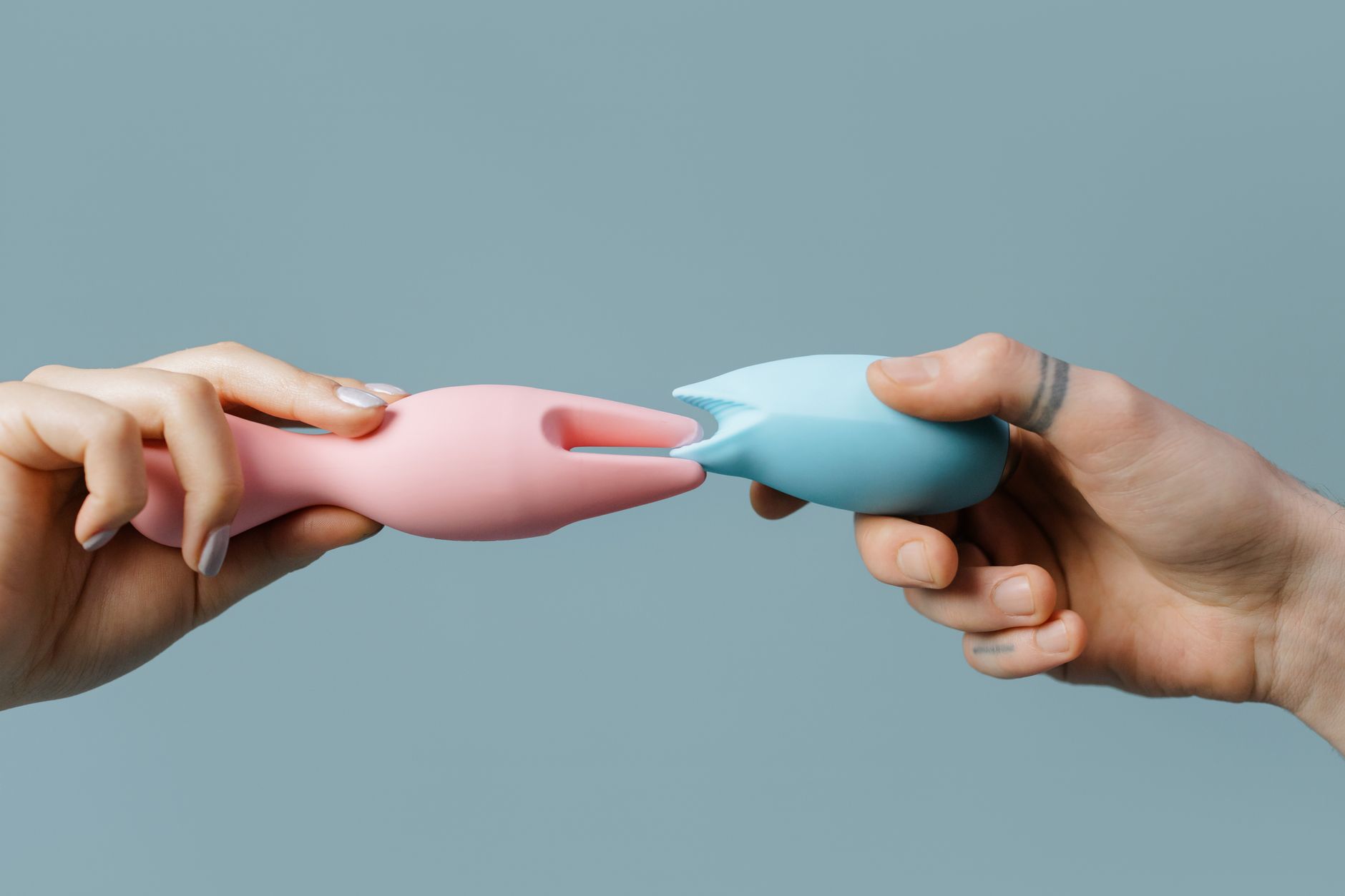
Here's what nobody tells you about pleasure after ten years
It doesn't vanish. It calcifies. The familiar touch that once sent electricity through your body starts to feel like routine. You still want your partner. Sex still happens. But somewhere between the third year and the fifteenth, the sensation itself becomes background noise. Your brain stops paying attention because it's been mapped and re-mapped so many times that there's nothing new to discover.
This isn't a failure of love. This is what happens to every long-term nervous system that doesn't actively work to stay awake.
Why sensation flattens in established relationships
Your body is wildly efficient. Habituation is a survival feature. The brain filters out repeated, predictable stimuli so you can focus on what's novel and potentially dangerous. That's useful when you're trying to notice a predator in the bush. It's terrible when what you're filtering out is your partner's touch.
After years together, your nervous system knows exactly what's coming. The pressure, the rhythm, the timing, the order of things. No surprises means no heightened arousal. No heightened arousal means sensation stays in your brain instead of moving down into your body. You're present, but you're not there.
Couple this with the neurochemical changes that happen naturally over time (dopamine and norepinephrine drop, oxytocin shifts), and you've got a recipe for what feels like disconnection. Many long-term partners describe it as numbness, not lack of interest.
What air-suction changes about the equation
Here's the practical bit: clitoral vibrators like the Lem work differently than fingers or conventional vibration because they use gentle suction instead of direct friction. That distinction matters for reconnection.
When sensation has flattened, your tissues need novelty to wake back up. Not harshness. Novel-ty. The suction pattern feels fundamentally different from what your body has experienced for years. It's specific, concentrated, and it doesn't require the kind of heavy pressure that can feel overwhelming when you're numb.
The air-suction mechanism also stimulates the broader clitoral complex (including the internal branches) in a way that feels more diffuse and full-body than traditional vibrators. Many couples tell me that this opens up new pathways of sensation. You're not chasing the same response. You're exploring a different one.
The partnership element changes everything
Using a lemon vibrator alone is one tool. Using one together is a completely different conversation.
When you introduce a device into your intimate routine with your partner, you're signaling something: "I want us to explore this differently. I want to feel again. I want us to rebuild this." That's not a small thing. It's an invitation to pay attention in a way you might not have in years.
The most successful couples I work with don't use the device to replace partnership. They use it to interrupt the pattern. Maybe it's the Lem on you while your partner touches you somewhere else. Maybe you use it together, and they're watching, fully present. Maybe they operate it and you guide them. The device becomes a conversation tool, not a solo activity.
The novelty effect works both ways. Your partner probably hasn't seen you respond to sensation in a long time. Watching you come alive reconnects them to their own desire, too.
How to actually introduce this without awkwardness
Don't spring it on anyone. This conversation needs to happen clothed, at neutral time, not during sex.
Try something like: "I've noticed I've been feeling a bit numb lately, and I don't think it's about us. I think my body just got used to one thing. I want to try something that might help me feel more. Would you be open to exploring that together?"
That's honest, it centers your body's experience (not your partner's inadequacy), and it explicitly invites participation. Give them time to sit with it. Some partners immediately get excited. Others need a day or two to process.
When you actually use it together for the first time, go slow. Start clothed or semi-clothed if that's less vulnerable. Use it on yourself first so you understand the sensations and your partner isn't holding a new device wondering if they're doing it right. Then let them try, or let them watch, or let them touch you while you use it on yourself. Build into it.
The pacing that actually works
If you've been numb for a long time, your nervous system won't wake up in one session. Think of this like retraining your senses.
Start at the gentlest setting on the Lem. Spend time at each level. Your goal isn't to come the first time (though you might). Your goal is to notice sensation. "Do I feel that? Where do I feel it? Is it getting warmer? Tingly? Different?"
Many people report that after two or three sessions at lower intensities, sensation starts to return in surprising places. The whole vulva feels more awake, not just the spot you're directly stimulating. Orgasms, when they happen, feel rounder and less goal-focused.
Over weeks, as your nervous system adjusts and novelty fades slightly, you can increase intensity or explore different patterns. But in those first weeks, patience is the instruction.
When numbness is about more than habituation
If you've been using a lemon vibrator regularly and sensation still hasn't returned after a month, something else might be happening. Stress, unresolved conflict with your partner, depression, medication side effects, or hormonal shifts can all flatten sensation independent of relationship length.
This is the moment to pause the device and check in with yourself or a therapist. Long-term desire problems often have psychological roots, and no vibrator can fix an unresolved argument or untreated depression. The Lem is a tool for reconnection when the disconnection is sensory. It's not a fix for deeper stuff.
Rebuilding the cognitive side
Your mind has to wake up alongside your body. This is where attention becomes the real tool.
While you're using the device, your job is to notice details. The temperature. The rhythm changes. How your breath shifts. Whether you want to move your hips. What you're thinking about. Most people spend years on autopilot during sex. You're literally retraining your brain to pay attention.
For your partner, their job is similar. Can they notice your micro-expressions? Are you actually present, or still partly somewhere else? If you're present, what does that look like on your face, in your body?
This attention-and-notification cycle is what reconnects long-term partners to each other. The device is just the thing that makes attention possible.
One important caveat about expectations
Rebuildling sensation after years of numbness doesn't recreate the early-relationship fireworks. That's not the goal, and chasing it will disappoint you.
What comes back is different. It's often quieter, more integrated into your whole body instead of concentrated in one spot. It's paired with actual knowledge of each other instead of novelty. Some people find they prefer it. Others find it takes time to grieve what's gone and appreciate what's here.
That's normal. That's also why having your partner in the room, conscious and present, matters. You're not trying to recreate the past. You're building something new together.
FAQ: Long-term pleasure and reconnection
Can using a lemon vibrator actually wake up sensation that's been numb for years?
Yes, but not instantly. The novelty of air-suction stimulation interrupts habituation, which is often enough to restart your nervous system's attention. Most people notice changes within 2-4 weeks of consistent use. The key is that you're retraining your brain to notice sensation, not forcing a response. Patience matters more than intensity.
What if my partner is threatened by the idea of using a vibrator?
This is common and usually about insecurity or misunderstanding. The conversation to have isn't about whether the vibrator is better. It's about what you're actually doing: solving a shared problem (your disconnection). Frame it as "This helps me feel closer to you" instead of "I need this instead of you." Some partners come around immediately once they see you responding. Others need reassurance built in over time. If they remain unwilling after honest conversation, that's worth exploring with a couples therapist.
Is there a way to use the Lem that makes my partner more involved, not less?
Absolutely. Ask your partner to operate the device while you guide them ("faster", "right there", "slower"). Or use it on yourself while they touch you elsewhere. Or have them watch while you explore, then switch roles. The device doesn't isolate you. Solo use of a vibrator is actually a great way to understand your own responses so you can guide your partner better. Many couples find that solo exploration first builds confidence for partnered use.
How long until sensation comes back if it's been years?
It depends on how deep the numbness goes. If it's purely habituation, you'll notice shifts within weeks. If it's wrapped up with relationship strain, depression, or medication side effects, it takes longer because you're addressing multiple layers. Don't rush it. The goal is sustainable reconnection, not a quick fix.
Can I use a lemon clitoral vibrator if I'm touch-averse or have low desire?
Yes, but start slower and more gentle than you'd think. Touch-aversion and low desire are usually protective mechanisms. A device that's too intense too fast can reinforce the aversion. The Lem's range of gentler settings is actually ideal for this because you can start at sensation without overwhelming yourself. Keep your partner informed about what feels okay and what doesn't. This is a consent conversation, not a performance one.
What's the difference between using a vibrator alone and using it with my partner present?
Solo use is about self-knowledge and retraining your nervous system. Partnered use is about rebuilding intimacy and shared attention. Both are valuable. Many couples do both. Solo exploration first often makes partnered use less awkward because you already know what you like and can guide your partner. The combination approach works best for most people.
Long-term relationships don't have to mean pleasure fades forever. They just mean you have to actively work to keep your nervous system awake. A lemon vibrator isn't magic. But it's a tool that works because it interrupts the pattern your body has settled into.
The real magic is the choice to stay present with each other, to explore something new together, and to rebuild what time and routine have flattened. The device is just the permission slip your nervous system needs to remember how to feel.
If you're ready to explore that, start a conversation with your partner. Not about the vibrator. About wanting reconnection. Everything else follows from there.
Have questions about using lemon vibrators or rebuilding intimacy in your relationship? Reach out to Get Lemon Toy and let's talk about what might work for you.