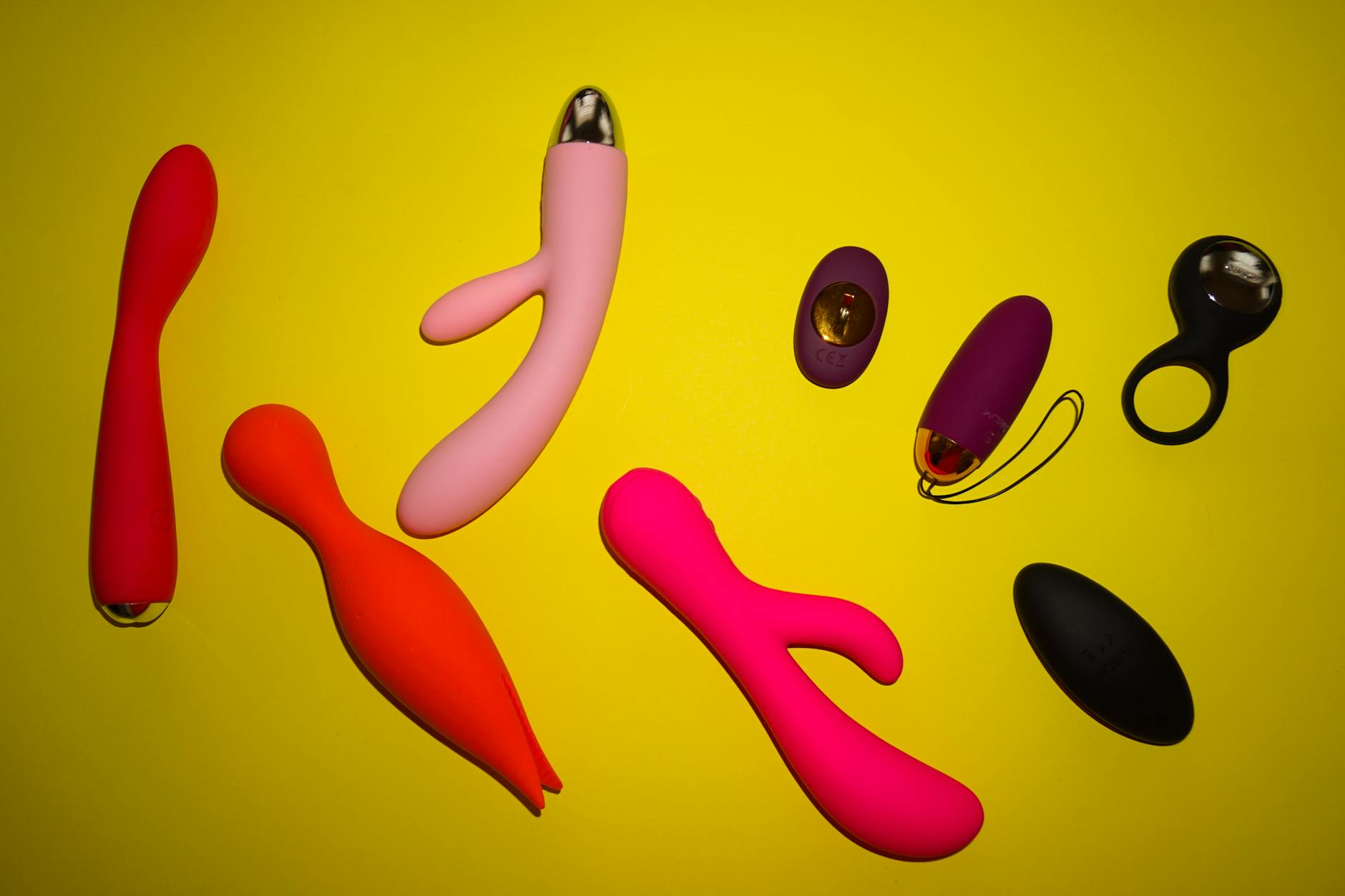
The guilt you're carrying isn't yours to carry
Let's start here. If you feel weird or ashamed about using a lemon clitoral vibrator, or about solo pleasure in general, you didn't invent that feeling. Someone gave it to you. Your family, your religion, your partner, your culture, or the twenty years of cultural messages that told you female pleasure was either shameful, selfish, or something to be earned through performance. Knowing that's the source helps. It doesn't fix it overnight, but it helps.
Self-consciousness about pleasure is one of the most common things I hear in sessions. And it's also one of the most fixable.
Where the shame actually comes from
When we talk about self-consciousness around pleasure, we're usually talking about one of three narratives that got installed early.
The first is religious or cultural: pleasure for its own sake is sinful, self-indulgent, or unladylike. You were taught that your body exists for reproduction or for your partner's satisfaction, not for your own. The idea of prioritizing your own sensation feels disloyal or wrong.
The second is relational: pleasure is something you should want only with a partner, ideally a partner who initiates it, wants it more than you do, and leads it. Solo pleasure feels like admitting you're not satisfied by them, or that you're doing something you shouldn't.
The third is performative: your sexuality has always been something you managed for other people's comfort. You learned to minimize your needs, take up less space, and frame pleasure as something that happens to you, not something you actively pursue. The idea of being deliberate about your own pleasure feels aggressive or unfeminine.
Recognize your story. That's the first step.
Why shame specifically blocks pleasure
This isn't abstract. Shame does real things to your nervous system. When you're using a lemon vibrator and simultaneously thinking "I shouldn't be doing this" or "what if someone knows," your body is in a low-level state of hypervigilance. Your pelvic floor tightens. Blood flow to the clitoris gets restricted. Arousal becomes harder to build, and orgasm harder to reach.
You end up in a loop where shame makes pleasure harder, which makes you feel broken or numb, which increases the shame. I see this cycle in nearly every client who was raised with the message that their pleasure wasn't important.
The solution isn't to think shame away. It's to deliberately use a tool like a lemon sexual toy to help your body override the narrative your brain is running.
Start with privacy, but not secrecy
There's a real difference. Privacy is healthy. You lock the door, turn off your phone, and give yourself space to explore your own body without an audience. That's self-respect. Secrecy is hiding, and hiding reinforces shame.
If you're hiding your lemon vibrator because you genuinely need physical privacy (which everyone does), that's fine. If you're hiding it because you believe you shouldn't want this, you're feeding the guilt.
I recommend being honest with yourself about which one it is. Write it down if you need to. "I want privacy because..." and finish the sentence. The answer tells you a lot about what belief you're working with.
Use the vibrator as a permission slip
Here's something counterintuitive: the physical sensation of a lemon clitoral vibrator isn't just about the nerve endings. It's also about what it means. When you hold a tool designed specifically for your pleasure, your brain gets a small permission slip. This is allowed. This is for me. This is not wrong.
That permission is worth more than you think. Many of my clients report that the first time they used a lemon vibrator, they cried. Not because of the sensation (though it's wonderful), but because they realized they were allowed to prioritize themselves this way. It's often the first time they've ever done something purely, unapologetically for their own pleasure.
Use that. Lean into what the tool represents, not just what it does physically.
The practical path from shame to pleasure
If you're starting from a place of real self-consciousness, here's the progression I recommend.
Week one: Buy a lemon vibrator and just hold it. Get used to having it in your hands. Some people call this "desensitization." I call it befriending it. You're teaching your nervous system that this object is safe and it's yours.
Week two: Use it in a low-stakes way. Turn it on while you're reading in bed, or listening to music. Don't make it about reaching an orgasm. You're separating pleasure from performance. This is crucial. Many people use vibrators the same way they've used sex with partners: as a goal-oriented activity. The shame often follows because you're still in performance mode.
Week three: Spend time with your lemon sexual toy when you're not under time pressure. Set aside 20 minutes when no one will interrupt you. Touch yourself first, feel your own arousal, and then introduce the vibrator. You're learning that pleasure starts with you, not the tool.
Week four and beyond: Use the vibrator as part of a full experience. Maybe you light a candle, or play music you love. You're not being fancy or romantic for someone else. You're setting the scene for yourself. That's what owning your pleasure actually looks like.
When your partner factors in
If you're in a relationship and your partner doesn't know you're using a lemon vibrator, or if they do and you feel shame about it, that's a different conversation than solo shame, and it matters.
Some partners feel threatened by vibrators because they've been taught (just like you have) that the man should be the sole source of pleasure. That belief gets lodged in both people. The solution isn't to hide the vibrator. It's to separate the two conversations: your pleasure is separate from your relationship satisfaction. Both can be true. You can love your partner deeply and also want your own orgasm, with or without them present.
If you're ready to bring this up, frame it around connection, not lack. "I want to explore what my body can feel. I'd like your support, but I'm doing this for me." That's honest. It's also clear. You're not asking permission. You're telling them what matters to you.
The somatic part (your body's role)
Self-consciousness is held in your body, not just your head. Your pelvic floor tightens. Your breathing gets shallow. Your hands might shake. That's all nervous system stuff, which means your body can help undo it.
Before you use your lemon vibrator, spend five minutes breathing deliberately. In for four, hold for four, out for six. This signals safety to your nervous system. Then, when you're using the vibrator, stay in your body. Notice the sensation. When your mind starts narrating ("I shouldn't be doing this," "this is weird," "what if..."), gently bring your attention back to what you're feeling physically. You're teaching your nervous system that pleasure is safe.
This is the actual mechanism of how shame gets dissolved. Not by thinking differently, but by feeling differently.
A word on fantasy and what you "should" be turned on by
Many people with shame around pleasure also have shame around what turns them on. They feel like their fantasies are wrong, or weird, or something they have to hide. That's another layer of the same problem.
Your fantasies don't make you a bad person. They're not a prediction of what you want in real life. They're your brain's way of exploring desire in a safe space. The lemon vibrators and other clitoral vibrators Hello Nancy makes are tools for exploring that desire without judgment.
If you're using a vibrator and also feeling shame about where your mind goes, that's worth examining. But not in the moment. Later, when you're calm. Ask yourself: who told me this fantasy was wrong? Is that person's authority real? The answer is usually no.
FAQ
Is it normal to feel guilty using a lemon vibrator?
Completely normal, and incredibly common. Guilt about solo pleasure has deep cultural roots. Most people feel some version of it, especially if they were raised in households where sex was either not discussed or presented as something functional and relational, not something for personal exploration. The guilt usually decreases with practice and with challenging the beliefs underneath it.
Will using a lemon vibrator make my partner feel inadequate?
Not unless they've already been taught that your pleasure is their responsibility. Many partners are relieved to learn their partner has tools for their own satisfaction. It takes pressure off them and often makes partnered sex better because you know your own body. Have the conversation with curiosity, not defensiveness. "I want to know my own pleasure better" is different from "you're not enough."
How do I stop the voice in my head that says this is selfish?
First, recognize that the voice isn't truth. It's a recording of what someone else taught you. Second, reframe the narrative: prioritizing your pleasure is taking care of yourself, not selfishness. Your partner sleeps eight hours, eats food they like, and exercises for their own well-being. You're allowed the same. Finally, practice the five-minute breathing exercise before using your lemon sexual toy. Your nervous system needs to learn that pleasure is safe.
Can I use a lemon clitoral vibrator with my partner?
Absolutely. Many people find that introducing lemon vibrators into partnered sex actually deepens intimacy because it removes the pressure on the partner to be the sole source of your orgasm. It can also help partners understand how your body works. Just make sure you're doing it because you want to, not because you think you should or because you're trying to manage their feelings about it.
What if I still can't relax, even with the vibrator?
That might be a sign that the shame is deeper than you can work through alone. A therapist, especially one trained in somatic work or trauma-informed practice, can help you understand where the belief came from and help your nervous system unwind it. There's no shame in getting support for this (I see what I did there). Many people need it.
How long does it take to feel less self-conscious?
This varies. Some people feel a shift the first time. Others take weeks or months. The speed matters less than the direction. You're retraining your nervous system and challenging beliefs that may have been installed for decades. Be patient with yourself. Every time you use your lemon vibrator without the guilt narrative running, you're weakening that pathway in your brain.
The actual ending
Your body isn't shameful. Your pleasure isn't selfish. The guilt you feel is borrowed from people who had their own complicated relationships with desire. You get to keep your body and your pleasure separate from that inheritance.
Using a Hello Nancy lemon vibrator won't magically erase shame that took years to build. But it gives you a concrete way to practice a different story. A story where your sensation matters. Where you matter. Where pleasure is something you deserve, not something you have to earn or hide.
That's the real work. And it starts the moment you decide to take it.