Here's the thing about rebuilding after pain
If you've had painful sex, your nervous system has learned something: touch in that context means danger. That's not a character flaw. It's literally your body doing its job. Now you're trying to convince it that pleasure is possible again, and tools like lemon vibrators can help, but only if you understand why and how to use them with that history in mind.
I work with people rebuilding pleasure after pain regularly. The pattern I see isn't that they need "more intensity" or "to relax more." It's that they need control, predictability, and permission to stop whenever their body says so. That's where clitoral vibrators designed around your pace, not someone else's, become genuinely transformative.
Why past pain changes everything in your body
Pain during sex—whether from vaginismus, endometriosis, trauma, or any other cause—trains your pelvic floor to tighten defensively. Your nervous system marks that area as unsafe. Even after the original pain is healed, your body keeps the guard up. It's a protection mechanism, and it's intelligent, even though it's also now blocking pleasure.
When you try partnered sex or even solo touch after painful experiences, you might notice: a reflexive tightening, dissociation (mentally checking out), numbness despite wanting to feel, or panic that feels disproportionate to what's actually happening. None of this means you're broken. It means your nervous system needs evidence that this context is safe.
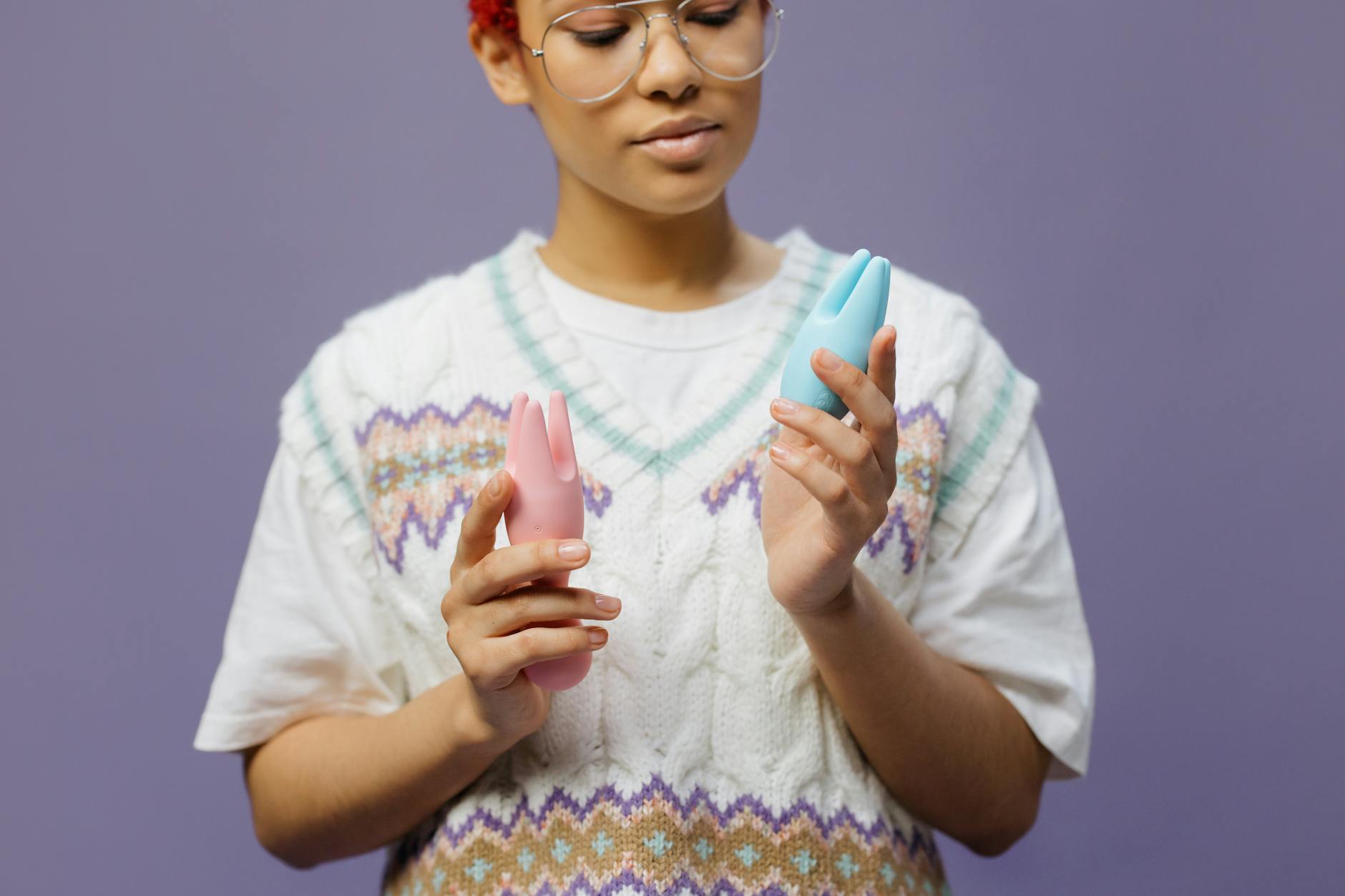
A clitoral vibrator like the Lem gives you three things a finger or a partner's touch often can't: complete control over pressure and rhythm, predictable sensation (you know exactly what pattern you're getting), and the ability to stop instantly without negotiation. That control is what lets your nervous system gradually downregulate from defensive mode.
The nervous system reset: how to start
Forget everything you know about "building up to" anything sexual. The goal isn't arousal yet. The goal is safety signals.
Start with the Lem on its lowest setting, pattern 1 or 2. Hold it near your clitoris but not touching. Just let your body sense the vibration from a distance. You're teaching your nervous system: "Vibration exists. It doesn't hurt. I'm in control." Do this for 2-3 minutes. If that feels fine, move to the next session.
Next time: light contact, same low pattern, same 2-3 minutes. You're building a track record of "vibrator equals safe sensation." This sounds slow. It is. That slowness is the point. Your body has learned to be fast and defensive. Rebuilding takes the opposite approach.
Over 3-5 sessions, gradually increase contact pressure (still lowest patterns) and session time. You're not chasing arousal. You're proving safety. Arousal will follow, but only after your nervous system believes the threat is gone.
When numbness shows up
You might use the vibrator and feel nothing. Or feel it intellectually—"yes, vibration is happening"—but no sensation in your body. This is incredibly common after pain, and it's not a sign you're doing it wrong.
Dissociation is your nervous system's backup defense plan. It learned: if you can't escape, go numb. Pushing through numbness doesn't fix it. Accepting it does.
When you notice numbness creeping in, pause the vibrator. Notice where you're holding tension—usually the jaw, shoulders, or pelvic floor. Breathe out slowly through your mouth. Try movement: shift your hips, roll your shoulders. Then restart at a lower intensity if you want to continue. Some sessions will be about sensation. Others will be about noticing the numbness without judgment and practicing the breath and release cycle. Both are progress.
Building tolerance to sensation (not desensitization)
After 1-2 weeks of low-intensity sessions, your nervous system usually starts to trust the vibrator. Now you're working on something different: expanding your window of sensation without triggering old defenses.
Try this: Use the Lem on pattern 1 or 2 for 3-5 minutes until you feel something close to pleasure. Notice where the pleasure lives in your body. Then—this is important—stop before you feel like stopping. Build a pattern of "I controlled when this ended." This proves to your nervous system that you can start and stop sensation on your terms.
Once you can do that comfortably, try increasing to pattern 3 for one short session. Notice what happens. Does your body tighten? Does your mind jump to a memory? Both are okay. That's information. The goal isn't to ignore these signals—it's to notice them, pause, breathe, and decide if you want to continue.
You're slowly retraining: vibration + clitoris + your control = safety and pleasure. Not pain. Not danger. Not someone else's need. Your pace. Your choice.
Separating solo pleasure from partnered sex
Here's what I wish someone had told me early on: rebuilding solo pleasure and rebuilding partnered sex are two different projects. They don't have to happen simultaneously.
Many people try to rush into partnered intimacy while their nervous system is still skeptical of solo sensation. That pressure usually makes everything harder. Instead, give yourself permission to rebuild solo first. Spend 4-8 weeks using a clitoral vibrator alone, getting comfortable with your own hand and your own pace. Let orgasm happen if it wants to. If not, that's fine too.
Once you genuinely enjoy solo pleasure without tension, introducing a partner becomes a choice, not a test. And when you do introduce a partner, you're not asking your body to trust them immediately. You're asking them to use what you learned about your own body: slow, pattern-based, pressure-controlled, stoppable anytime.
The conversation you need to have with your partner
If you're partnered, your person needs to understand: this isn't about them. Your rebuilding process isn't a reflection on how attractive or skilled they are. It's about your nervous system needing to separate partnered touch from the painful past. That's clinical, not personal.
Tell them specifically what helps: "I need us to start slowly, use the vibrator first so I can get comfortable, and I need you to check in before changing intensity." That's not asking for less intimacy. It's asking for a different shape of intimacy while you rebuild.
One thing I've found that helps: have your partner use the lemon vibrator on you early on, on the lowest settings, while you guide the pressure and speed. This lets them participate in your rebuild without their touch triggering old protective responses. The vibrator becomes a buffer and a teaching tool.
What to watch for (red flags that mean pause)
Some discomfort during rebuilding is normal. Tension, sensitivity, even moments of shame or sadness coming up—these are part of the nervous system processing that this context isn't dangerous anymore.
But some signals mean stop: sharp pain (not pressure-discomfort, actual pain), involuntary panic or dissociation that doesn't ease with breathing, flooding of traumatic memories you can't ground out of. These aren't failure. They're your nervous system saying "not yet." Talk to a somatic therapist, trauma-informed pelvic floor PT, or sex therapist. They have tools beyond what a vibrator can offer.
The timeline nobody talks about
Rebuild isn't linear. You might have a week where everything feels open and easy, then a week where touching yourself feels impossible again. Stress, a remembered smell, your cycle, a difficult conversation—any of these can shift your nervous system back into defensive mode temporarily.
This doesn't mean you failed. It means you're human. The fact that you can return to pleasure-building after a setback is actually the proof that rebuilding is working. You're not stuck. You're learning to move through difficulty.
Most people I work with see genuine shifts in 8-12 weeks of consistent, low-pressure solo practice. Some take longer. Some move faster. The speed doesn't matter. The consistency does.
When solo pleasure starts to feel good
Eventually—and this arrives quietly, not with fanfare—you'll use your lemon vibrator and notice you're genuinely enjoying it. Not performing enjoyment. Not forcing it. Actually present and feeling it. That's the moment things shift.
From there, you can start to explore what you actually like: faster patterns or slower ones, longer sessions or short ones, clitoral focus or broader body touch. You're no longer in survival mode. You're in discovery mode. That's when pleasure becomes expansive again.
FAQ: rebuilding pleasure after pain
Can I use a vibrator if I'm still experiencing pain during sex?
If you're currently in pain during partnered sex, using a vibrator during that same activity might reinforce the pain association. Instead, use the vibrator solo in a completely different context—different room, different time of day, zero pressure for any outcome. Let solo pleasure be its own practice, separate from the context where pain happens. Once solo pleasure feels safe and good, you can gradually bring your partner in.
How long until I feel pleasure using a lemon vibrator after past pain?
Sensation often returns within 2-3 weeks of consistent use. But pleasure—genuine enjoyment, not just physical sensation—usually takes 6-12 weeks. Your nervous system needs evidence that this context is safe over time. Patience is the tool here more than the vibrator is.
What if I feel ashamed or guilty using a vibrator while rebuilding?
Shame often comes from the same place that produced the pain: messaging that your pleasure isn't safe or isn't yours to claim. Rebuilding pleasure requires rebuilding permission. Use the vibrator anyway, even while feeling ashamed. Your body learns through repetition that pleasure is safe, regardless of what your mind is saying. The shame usually fades with consistent practice.
Should I tell my partner I'm rebuilding pleasure with a vibrator alone?
That depends on the relationship. In a trust-based partnership, yes—transparency usually helps. But tell them what it means: "I'm retraining my nervous system to trust pleasure. This is about me, not about you." If you're in a relationship where it's unsafe to be honest about your body and healing, that's a separate, bigger issue worth addressing with a therapist.
Can I use a lemon clitoral vibrator if I have vaginismus or pelvic floor tension?
Yes, because lemon vibrators are external, not penetrative. They actually work really well for people with pelvic floor tension because you control all the pressure and can keep stimulation surface-level. Start on the lowest patterns and focus on nervous system safety first, sensation second.
What if I want to use a vibrator with my partner but I'm scared they'll trigger old pain patterns?
Communication is everything. Tell your partner: "If I ask you to stop, we stop. No questions." Practice that stopping—have them build the habit of checking in every 2-3 minutes early on. Many people who've experienced pain need that predictability and control. Once your partner proves they respect your boundaries, trust usually rebuilds alongside pleasure.
The real work is the permission
Tools like the Lem can help your nervous system relearn that touch and pleasure are possible. But the actual work is giving yourself permission to rebuild at your own pace, to feel whatever shows up without rushing to "fix" it, and to trust that pleasure is on the other side of patience.
Your body isn't broken. It learned to protect you. You're teaching it that protection can soften now. That takes time. It takes consistency. It takes you choosing yourself over and over. The vibrator is just the vehicle. You're the one doing the real work.
If you're struggling with this process or past pain is blocking your rebuilding, reach out. There's no shame in needing support. Contact us if you want to talk through what might work for your situation.