
Here's the thing nobody says out loud
When you bring a toy into your relationship, your partner might light up. Or they might freeze. The freeze is never actually about the toy. It's about the story they've invented in their head: that you need it because they're not enough. That you've been faking orgasms. That introducing a vibrator is a referendum on their performance.
None of that is true. And yet.
I've worked with hundreds of couples where this exact moment becomes a turning point. Not because the toy magically fixes anything, but because it forces the real conversation. The one about what pleasure actually is, who it belongs to, and why both of you deserve it.
Why the intimidation happens (and it's not about you)
Most people grow up with exactly zero education about pleasure that isn't centered on penetration or a partner's involvement. So when you say "I want to use a clitoral vibrator during sex," what he hears (in the story his brain tells) is "Your body isn't enough." That's the gap.
He's probably also been taught that good sex means he should be able to give you everything you need. That his hands, his body, his effort should be the source of your pleasure. A vibrator threatens that identity. It says: pleasure isn't a gift from a partner. It's a conversation between you and your own body.
That terrifies some people. Not because they're bad partners, but because they've built their sense of sexual competence on a false premise.
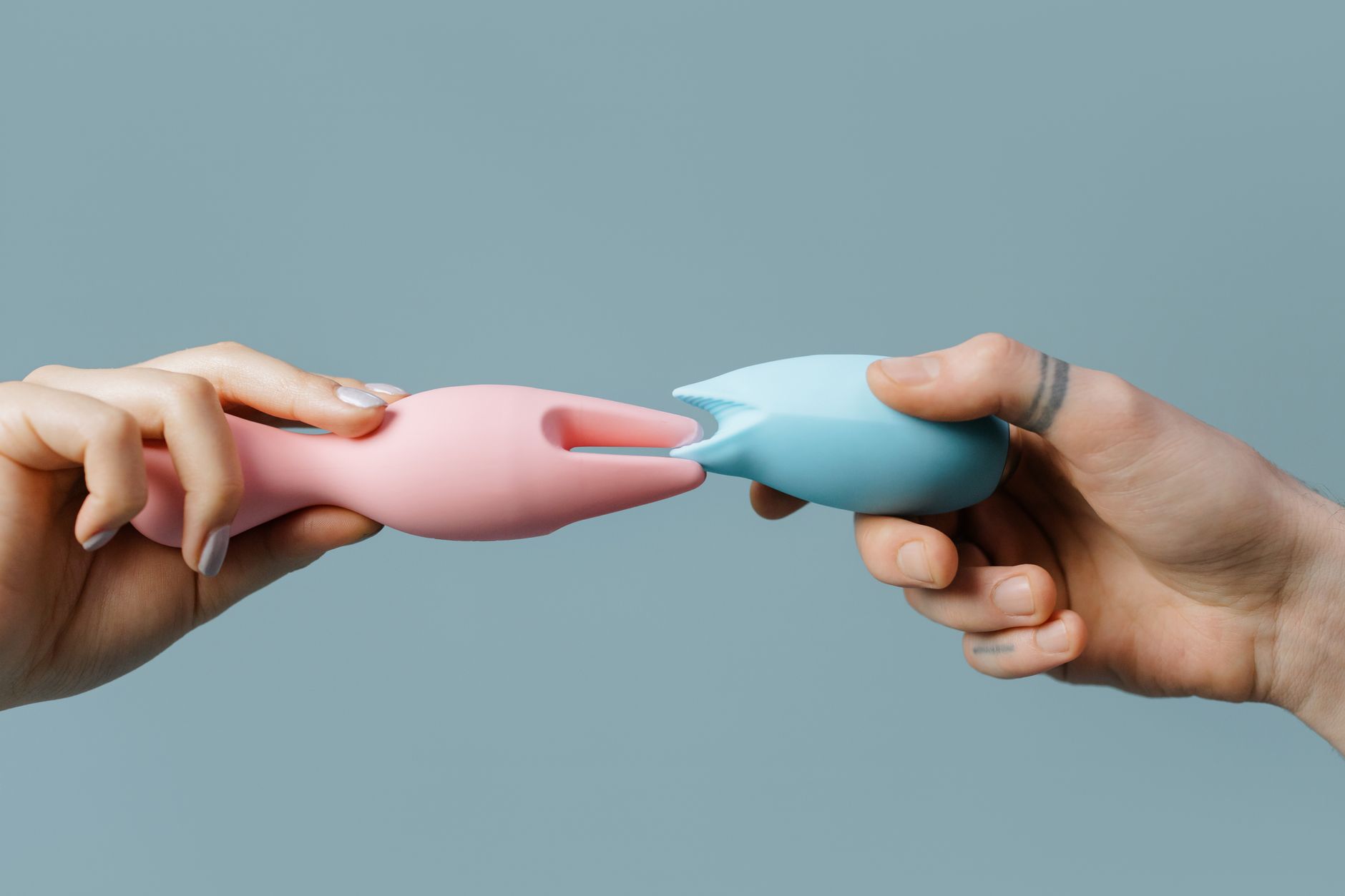
Photo by cottonbro studio on Pexels
The conversation before you even touch the toy
Don't lead with the vibrator. Lead with the truth.
Honestly though: start here. "I've realized something about my pleasure that I want to explore with you. It's not about you not being enough. It's about me understanding what works for my body." That distinction matters.
Then give him specific information. Don't say "I want more stimulation." Say "I want clitoral stimulation while we're together, and my body responds really well to that particular kind of pressure. It's not something hands can do for long without getting tired."
That last part is key. When he understands that using a lemon clitoral vibrator is actually reducing his effort (not replacing it), the frame shifts. You're not asking him to be replaced. You're asking him to be involved differently.
How lemon vibrators specifically change the dynamic
Air-suction toys like the Lem vibrator have a weird advantage here. They're not vibrators in the traditional sense. They pulse. They feel almost like they're pulling pleasure from your body rather than battering it into existence.
For partners who are intimidated, that matters. It doesn't look or sound like a substitute for what bodies do. It looks like an assistant. A tool you're using together.
Here's the specific move: introduce it during foreplay, not during main event. Let him watch you use it on yourself for a few seconds. Then hand it to him. "Try this. Feel how it responds to what I'm telling you." Suddenly he's not inadequate. He's learning your body in a new way.
Three ways to reframe this from threat to connection
First: Make it about discovery, not diagnosis. "I want to figure out what my body really likes, and I want you there while I do it." That's collaboration. That's intimate.
Second: Put him in control of the tempo. Instead of holding the toy yourself, let him control the pattern. He's still the one directing the experience. The toy is just an extension of that.
Third: Use it as foreplay, not the main event. Start with the lemon clitoral vibrator, build arousal together, then move into partnered sex. The toy becomes the appetizer, not the whole meal. Psychologically, that's huge for partners who feel threatened.
The scripts that actually work
If he says: "Do you not want me to touch you?"
You say: "I want you to touch me and also want this sensation at the same time. Those two things exist together."
If he says: "I can do that for you."
You say: "I know you can. This is about what my body enjoys. It's not about your skill. It's about me." Then show him: "Watch. When the pattern shifts, I respond. That's me telling you what works."
If he says nothing and just looks uncomfortable:
You pause. "Talk to me. What are you feeling?" Let him name it. "Worried I'm not enough?" He'll probably say yes. Then: "I need you in this. Just in a different role. I need you present."
What changes when he gets it
Honestly, something shifts. He stops thinking about his own performance and starts thinking about yours. He starts paying attention to how your body responds to different patterns. He's learning you, not proving himself.
That's when pleasure actually deepens. Because you're not performing anymore. You're not managing his feelings about your pleasure. You're just having it.
Most partners, once they understand this, become the ones suggesting the vibrator. They realize it's not competition. It's collaboration. And sex becomes about both people actually getting what they want instead of one person performing and the other person managing emotions.
When intimidation turns into something else
If after that conversation your partner still refuses, or if they refuse and then punish you for wanting it, that's not about the toy. That's about control. And that's a different conversation, possibly one you need to have with a therapist.
But most of the time? Most of the time, the intimidation is just fear that sounds like "no." And fear gets solved by information and presence, not by backing down.
FAQ
How do I know if my partner is actually intimidated or just not interested in toys?
There's a difference. Disinterest sounds like "That's just not my thing." Intimidation sounds like "You don't need that," or "I'm enough for you," or silence followed by distance. Intimidation usually comes with some version of "you're rejecting me by wanting this." Disinterest doesn't carry that emotional charge.
Should I use a lemon vibrator alone first or show him immediately?
Use it alone first. Get comfortable with it. Understand what patterns work for you. Then when you introduce it to him, you're not figuring it out together in real-time. You know what you like. You're just inviting him to participate.
What if he agrees but clearly feels weird about it?
That's normal. Let him feel weird for a bit. Some people need time to metabolize the shift in their head about what sex should look like. As long as he's showing up and being present, that's progress. The weirdness usually fades when he realizes that his pleasure isn't diminished and yours is actually better.
Is it normal for partners to feel insecure about sex toys?
Completely. The cultural messaging around sex toys is that they're substitutes for partners. They're not. But until someone processes that, insecurity is the logical response. That insecurity is actually an opening for a deeper conversation about pleasure, adequacy, and what you both actually want.
How do I bring this up without making him defensive?
Timing is everything. Not during or right after sex. Not when he's already stressed or tired. Pick a calm moment and frame it around you, not him. "I've been thinking about my own pleasure and I want to explore something. I'd love your involvement." That's about you taking ownership of your experience.
What if he agrees but then ignores the toy completely during sex?
That's avoidance, not agreement. You'll need to address it. "I noticed you seem uncomfortable when we talk about this. What's really going on?" Give him space to be honest. Sometimes it takes a few conversations for real intimacy to show up. Sometimes it means he needs to hear from someone else (a therapist, another trusted voice) that this is normal and healthy. That's okay. You're building something. It takes time.