
Your body doesn't change overnight. But hormones? They absolutely can.
Here's what nobody tells you: the sensitivity of your clitoris isn't fixed. It shifts. During your cycle, during pregnancy, after childbirth, during perimenopause, on different medications. The stimulation that felt perfect last month might feel too intense or underwhelming this month. And if you're using the same vibrator the same way, you'll feel like your body is broken. It's not. It's responding to something real.
That's where lemon vibrators and clitoral suction devices shift the game. Unlike traditional vibrators that buzz at a single fixed intensity, lemon clitoral vibrators use pulsing suction patterns that work across a wider range of sensitivity. This matters when your hormones are in flux.
How hormones actually change clitoral sensation
Your clitoris is an erogenous powerhouse, but it's also exquisitely sensitive to hormonal shifts. Here's the physiology:
Estrogen and progesterone fluctuate during your menstrual cycle. Right after ovulation, when progesterone climbs, many people report their clitoris feeling less sensitive and needing more direct pressure to respond. During the follicular phase (early cycle), estrogen is rising and sensitivity often increases. The tissue swells slightly, blood flow increases, and lighter touch feels more pleasurable.
During pregnancy, blood flow to the pelvic region increases dramatically. This sounds like it should feel amazing. Sometimes it does. Other times the heightened sensitivity becomes overwhelming, and what used to feel good now feels raw or too intense.
Postpartum, everything is tender. Tissue is healing. Hormones are crashing. Sensation might feel muted or hypersensitive depending on the day. The same thing happens in perimenopause and menopause, when estrogen withdrawal changes tissue thickness and blood flow patterns.
Then there's medication. Antidepressants, hormonal birth control, blood pressure medications. All of these change the vascular and neurological pathways that drive arousal and sensation.
Lemon clitoral vibrators handle all of this better than traditional vibrators because the suction mechanism is gentler on sensitive tissue. You're not relying on direct vibration pressure. You're using gentle pulsing suction that can be dialed down on high-sensitivity days and ramped up when you need more intensity.
Why suction works better during hormone shifts
When sensitivity is in flux, direct vibration can feel jarring. A lemon vibrator or clitoral suction device works differently. Instead of rapid buzzing against your clitoris, it creates a gentle pulling sensation. This engages more of the clitoral network (yes, there's way more going on under the surface than you see) without the same concentrated pressure.
Think of it this way: direct vibration is like tapping. Suction is like a gentle draw. When your tissues are swollen from hormonal changes, that draw feels more diffuse and comfortable.
Lemon clitoral vibrators also tend to have multiple pattern options. You might use pattern 1 during a high-sensitivity day and pattern 5 when you need something stronger. This flexibility matters more when your baseline changes week to week or month to month.
The technology also makes a practical difference. Because lemon vibrators rely on suction rather than penetrative pressure, they're gentler on the delicate tissue that becomes more fragile during certain hormonal phases. If you're postpartum, perimenopausal, or dealing with medication side effects that thin vaginal tissue, this gentleness becomes essential.
Navigating the cycle with a lemon vibrator
Here's a practical framework I share with clients:
Follicular phase (days 1-14). Estrogen is rising, sensitivity is typically increasing. You might actually crave more intensity. This is a good time to experiment with higher intensity settings and longer sessions. Your body is primed for stimulation.
Ovulation (days 14-16). Peak sensitivity for many people. This is when many clients report their most powerful orgasms. You might need less warm-up time and less intensity overall. A medium setting often does the trick.
Luteal phase (days 16-28). Progesterone dominates, sensitivity often decreases. You might need longer warm-up, lower initial intensity, and patience. This is not a failure. It's your body operating differently. A lemon vibrator's gentler suction pattern works well here because you're not fighting against direct pressure.
That said, everyone's cycle is different. Some people experience the opposite pattern. Some people on hormonal birth control don't cycle at all. The point is to notice your own pattern and adjust.
Pregnancy, postpartum, and lemon vibrators
During pregnancy, if you're cleared for sexual activity, lemon vibrators are actually ideal because they're non-penetrative and the gentler suction won't feel alarming on heightened tissue. Many pregnant clients appreciate being able to control intensity precisely.
Postpartum, wait until you're medically cleared (usually 4-6 weeks for vaginal birth, longer for cesarean). When you do restart, go slow. Your pelvic floor is still recovering. Your hormones are crashing. Sensitivity is chaotic. A lemon clitoral vibrator's ability to go low-intensity is genuinely helpful here. Start at pattern 1, give yourself 20 minutes of warm-up, use lube, and don't expect the same response you had before. Your body is rebuilding.
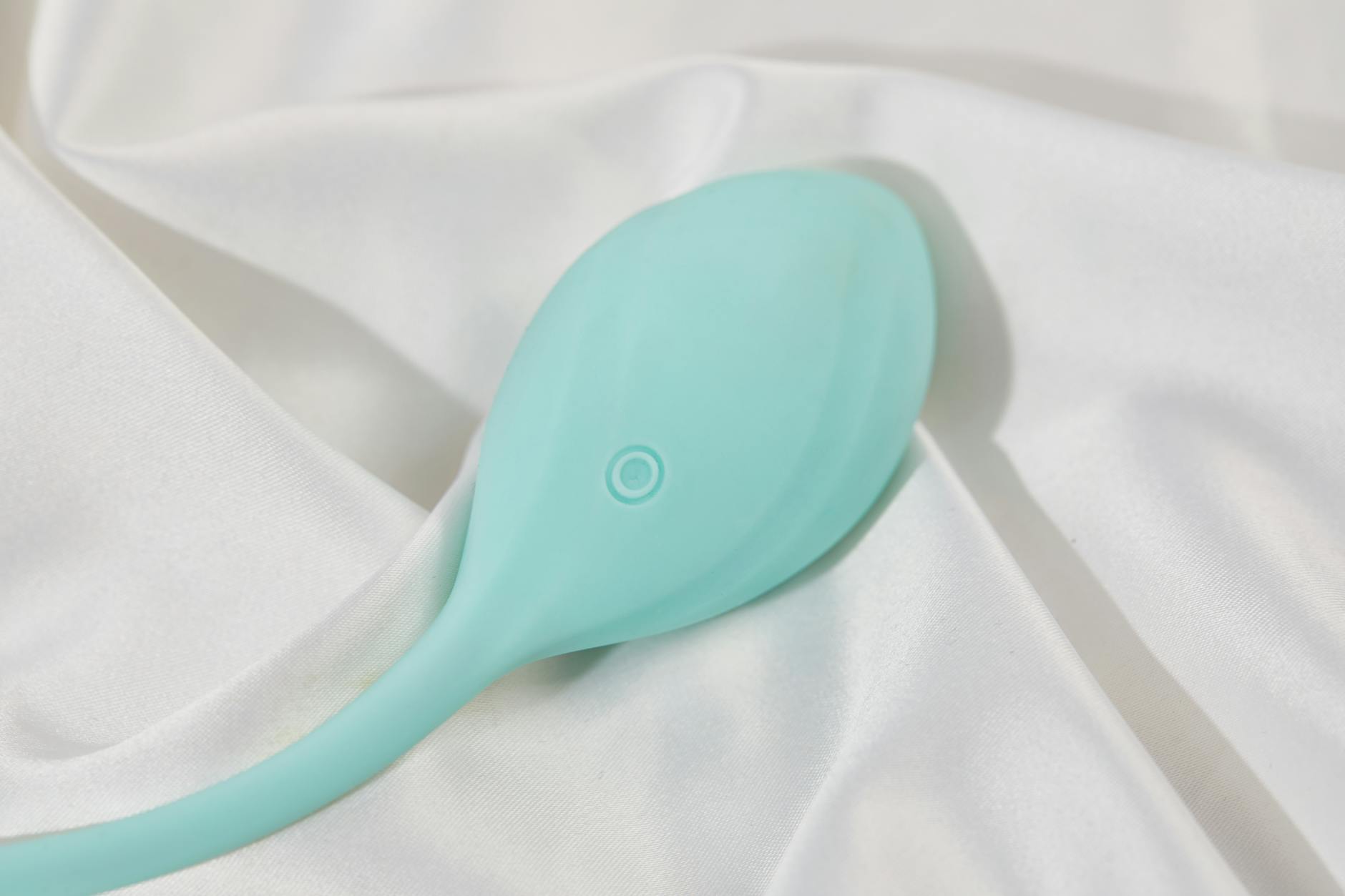
Photo by IFONNX Toys on Pexels
Medication side effects and hormonal pleasure
If you're on an SSRI, you already know that sexual response can flatten. Desire drops, arousal takes forever, orgasm feels like work. A lemon vibrator can't fix the underlying neurochemistry, but the suction stimulation is sometimes more effective than traditional vibration when arousal is dampened. The sensation registers differently in the nervous system. It's worth testing.
Same with hormonal birth control. Some people on hormonal contraception feel their pleasure contract slightly because testosterone drops. Others feel liberated because pregnancy anxiety is gone. If you're in the first camp, lemon vibrators often work better than options you've tried before because the gentler, more diffuse stimulation matches your reduced baseline sensitivity.
If you're considering a change to your medication or birth control because of sexual side effects, that conversation is worth having with your doctor. But while you're figuring it out, a lemon clitoral vibrator can be a useful interim tool.
Building your own sensitivity map
Here's what I recommend: spend 2-3 months tracking not just your cycle or your baseline state, but how a lemon vibrator actually feels at different times. Write it down. What intensity felt best? How long did warm-up take? Did the sensation feel diffuse or concentrated? Over time, you'll see your own pattern emerge.
This isn't obsessive. It's information. And it transforms the conversation from "my body is broken" to "my body is changing, and here's how I adapt." The second one is empowering. The first one kills arousal.
The relationship piece
If you're with a partner, this information is valuable to share. Not as a complaint or a problem to solve, but as a data point. "My sensitivity changes during my cycle" is useful context. "Here's when I need more warm-up time and lower intensity" is actionable. Partners often feel like they're doing something wrong when sensitivity shifts. Knowing it's cyclical and normal and manageable actually relieves a ton of pressure.
If you're solo, the benefit is pure. You get to explore your own pleasure without performance pressure. You can spend time understanding what actually works for your body right now, in this phase of your life.
FAQ
Can I use a lemon vibrator if my sensitivity is extremely high right now?
Yes. That's actually one of the key advantages of lemon clitoral vibrators. Start at the lowest setting and use it over your clothing or with a barrier between the toy and your skin if needed. Suction is inherently gentler than vibration because it's not pounding. You're in control of the pressure with your own body position.
How does a lemon clitoral vibrator work differently than a traditional vibrator when hormones fluctuate?
Traditional vibrators rely on rapid vibration at a fixed frequency. Lemon vibrators use gentle suction with pulsing patterns. This means the sensation is more diffuse, engaging more of the clitoral anatomy without concentrated pressure. During hormonal shifts when tissue sensitivity changes, this flexibility in stimulation type is valuable. You're not locked into one sensation.
Should I change vibrators at different points in my cycle?
Not necessarily. If you have a lemon vibrator with multiple intensity settings and patterns, you can stay with the same toy and adjust the settings based on your sensitivity that day. This is actually simpler than rotating toys. One lemon clitoral vibrator with range can cover your entire month.
Does a lemon vibrator help with reduced sensitivity from medication?
Possibly. Because the suction stimulation hits different nerve pathways than traditional vibration, some people with medication-related sensitivity changes find lemon vibrators more effective. It's worth trying, but lemon vibrators aren't a fix for all medication side effects. If desire or arousal itself is affected (not just sensation), that's a conversation to have with your prescriber.
Can I use a lemon vibrator during pregnancy if I'm having increased sensitivity?
If you're medically cleared for sexual activity, yes. Many pregnant people find non-penetrative lemon vibrators ideal because you control the pressure and can start at very low settings. The gentle suction doesn't feel invasive the way some penetrative options might when tissue is already engorged and sensitive.
What if my sensitivity changes and I can't find a setting that works?
Take a break. Not forever. Just a few days. Sometimes the most responsive thing you can do for fluctuating sensitivity is to stop trying and let your nervous system reset. When you come back to it, often the picture clarifies. And if sensitivity remains really unpredictable, talk to your doctor. Hormonal chaos that doesn't resolve might signal something worth investigating.
Here's the thing
Your pleasure is not a fixed trait. It's a living, responsive system that shifts with your hormones, your stress, your relationships, your age. A lemon vibrator works during these shifts because it's designed with that flexibility in mind. You're not trying to force your changing body into a rigid tool. You're using something that meets you where you are.
If you're noticing sensitivity changes, that's not a failure. It's information. And with the right tool and some patience, you can keep exploring pleasure through every phase of your life.
Have questions about how lemon clitoral vibrators work with your specific situation? Reach out. We're here to help you find what actually works for your body.