Let's name what's really happening
One of you wants sex three times a week. The other wants it twice a month. Neither of you is wrong. This is one of the most common friction points in long-term relationships, and it rarely gets solved by talking harder about it or by one person white-knuckling through resentment.
Here's what I see happen: the higher-desire partner starts to feel rejected. The lower-desire partner starts to feel pressured. Sex becomes something you schedule like a dentist appointment, and it stops being fun for everyone. Then you either push through it (and it gets worse), or you avoid it entirely, and the resentment calcifies.
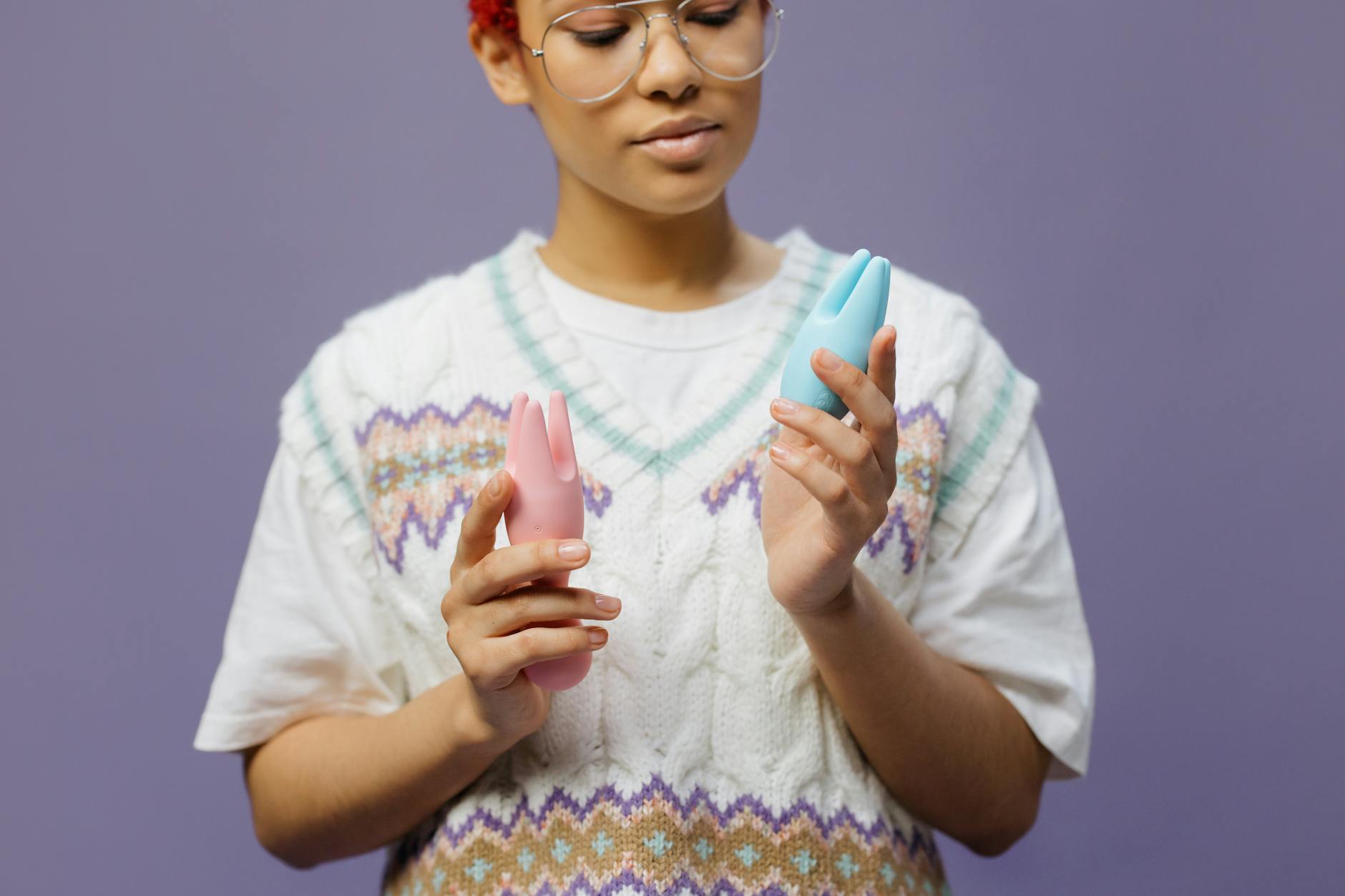
A lemon vibrator changes the equation. Not because it's magic. But because it reframes what you're actually doing.
The real problem isn't frequency. It's independence.
When desire is mismatched, the higher-desire partner often waits for the lower-desire partner to be ready. That waiting creates a power dynamic. The lower-desire partner feels like they're the gatekeeper of their partner's pleasure. The higher-desire partner feels dependent.
Both of those feelings are terrible.
A clitoral vibrator like the Lem decouples your pleasure from your partner's schedule. If your partner doesn't want sex right now, you're not stuck. You have an option that doesn't involve resentment, doesn't involve pressure, and doesn't involve your partner feeling like they failed you.
That sounds simple. But the psychological shift is massive.
How this actually looks in practice
I had a couple in my practice. She wanted sex twice a week. He wanted it once every ten days. They were stuck in a loop: she'd initiate, he'd decline (not meanly, just genuinely lower libido), she'd feel rejected, he'd feel guilty, they'd end up having obligatory sex neither of them enjoyed.
I suggested she explore solo pleasure separately from partnered sex. Not to replace their sex life, but to exist alongside it.
They bought a lemon clitoral vibrator. She started using it on Sunday mornings while he was still asleep or reading in the next room. It took pressure off their sex life completely. Suddenly, when they did have sex together, nobody was keeping score. She wasn't running a deficit. He wasn't performing out of obligation.
Within two months, they were having sex more often. Not because they scheduled it differently. Because the scarcity mindset dissolved.
Why air-suction vibrators work better for this specific dynamic
There are a few reasons a lemon sucker works particularly well when desire is mismatched:
First, they're genuinely different. A traditional vibrator can feel like a substitution for your partner. An air-suction device like the Lem feels like a completely different experience. It's not that you prefer it to your partner. It's that it's its own thing. That distinction matters psychologically.
Second, they're fast. If you're using it solo in the morning or evening, you're not checking your phone for an hour wondering if your partner is in the mood. The whole experience takes 5-15 minutes. That efficiency actually matters when you're building a solo practice that coexists with your couple life.
Third, they feel physically subtle. The suction pattern draws blood to the clitoris without the intense direct vibration of a traditional toy. That gentleness means you can use it more frequently without desensitization or soreness. Which means more consistent solo pleasure and less of a rebound effect where you feel numb during partnered sex.
The conversation you actually need to have
Honestly though, the toy isn't the real fix. The fix is deciding together that solo pleasure and partnered pleasure are two different things that can coexist.
That's a bigger conversation than most couples have. Here's what I recommend:
Don't frame it as "I need this because you're not meeting my needs." Frame it as "I want to have more consistent pleasure in my own body independently. This isn't about replacing us. It's about me taking ownership of my own satisfaction."
If your partner has performance anxiety or feels threatened, that's worth acknowledging directly. Some people hear "I'm buying a vibrator" as "You're not enough." It's not, but I understand the fear. Say that explicitly.
Then say: "I want you to feel good about this. I want this to actually help us both, not create more distance."
Then listen to what they actually need to feel secure. Maybe they want to be in the room. Maybe they want you to tell them about it afterward. Maybe they want to try it together first. None of those are weird.
Using a lemon vibrator together when desire is mismatched
Here's something counterintuitive: some of my best couple outcomes have involved the lower-desire partner discovering that they actually enjoy watching or participating in their partner's solo pleasure.
There's zero pressure in that dynamic. One partner is already in a good place (on their own or during foreplay). The other partner is just... present. Often they end up wanting to participate or escalate into partnered sex. Sometimes they don't, and that's genuinely fine because nobody's keeping score.
If you try this, set expectations first: "I might use this solo and be done. Or I might want you to watch or join in. I'm not expecting anything from you."
Then pay attention to what actually happens instead of what you predicted.
When desire mismatch is a symptom of something else
Here's the part where I need to shift into therapist mode for a second.
Sometimes frequency mismatch is just biology and schedule misalignment. Sometimes it's a sign that someone's checked out emotionally, or resentful about something else in the relationship, or dealing with depression or medication changes that aren't being named.
If you're introducing a lemon clitoral vibrator into your relationship and you notice that the lower-desire partner actively objects (not just feels awkward, but actively resists the idea), that might be worth exploring with a couples therapist. It's not a dealbreaker. But it often signals something deeper that a toy can't fix.
Same goes if you're using the vibrator and it's creating more distance instead of less. That's not a product failure. That's a sign that the real issue is emotional connection or communication.
The permission part
I think the hardest part of desire mismatch isn't actually the logistics. It's the guilt.
The higher-desire partner feels guilty for wanting more. The lower-desire partner feels guilty for not wanting as much. Both of you are operating from shame instead of information.
Here's what I want you to hear: your body is not wrong. Your desire level is not a character flaw. And your partner's desire level isn't a character flaw either.
A lemon vibrator helps because it removes the performance element. You get to have pleasure that isn't about negotiation or obligation or checking in with someone else's capacity in that moment.
That sounds selfish. It's actually the most generous thing you can do for your relationship. When you're not running a pleasure deficit, you stop resenting your partner for not filling it. When your partner doesn't feel like the gatekeeper of your satisfaction, they stop feeling guilty.
From there, the sex you do have together is actually want-based instead of obligation-based. And that's worth more than any amount of frequency.
FAQ
Can using a vibrator solo actually improve couple sex?
Yes, consistently. When one partner isn't running a pleasure deficit, the pressure lifts off the other partner. You stop performing out of obligation. That changes the whole quality of shared intimacy. Many couples find they're actually having sex more often after introducing solo tools, even though that wasn't the goal.
Will my partner feel threatened or replaced?
Maybe initially. That's worth addressing directly instead of hiding it. Have an honest conversation about what you're actually doing and why. Most partners respond well to transparency. Some need reassurance that solo pleasure isn't a replacement for partner sex. Some actually want to participate or watch. Those conversations happen better before you buy the toy, not after.
What if my partner wants to use the lemon vibrator too?
Great. That's one route. You could take turns, or you could each get your own (Get Lemon Toy makes that easy). Or you could use it together during foreplay or partnered sex. There's no single right way. Figure out what actually works for your bodies and your dynamic.
Does a lemon sucker feel different than a regular vibrator for couples?
Yes. The air-suction sensation is gentler and more concentrated than traditional vibration. For couples with desire mismatch specifically, that difference matters because it makes solo use feel distinct from partnered sex. You're not practicing with a substitute. You're practicing with something that's genuinely its own experience.
How often should the higher-desire partner use a lemon vibrator solo?
That's totally up to you and your body. Some people use it a few times a week. Some use it once. The point isn't frequency. The point is that you have an option that doesn't depend on your partner's availability. That psychological freedom often matters more than the actual physical release.
What if we try this and it makes things worse?
Then there's probably something else going on beneath the desire mismatch. A couples therapist can help you figure out what that is. A toy isn't a substitute for real communication or addressing deeper disconnection. But in most cases where both partners are willing to try, introducing solo pleasure actually does ease the tension.
The thing nobody tells you
Desire mismatch feels like a failure when you're in it. Like one of you is broken or the relationship is headed somewhere bad.
But it's actually really common. And it's actually really fixable once you stop trying to force matching libidos and start building a system where both of you get to have pleasure.
A lemon vibrator is a tool for that system. Use it. But more importantly, have the conversation first. Name what's really happening. Build permission together. Then let the tool do what it does.
Your pleasure matters. Your partner's pleasure matters. And they don't have to be the same thing to both be real.