
When Your Partner's Anxiety Becomes Your Shared Problem
Here's what I hear most often from couples sitting across from me: "We stopped having sex because he couldn't keep an erection" or "She stopped enjoying it because she felt like she was failing him by not coming fast enough." Performance pressure is one of the most insidious relationship killers because it disguises itself as care. "I want you to feel good" becomes "I'm failing you if you don't," and suddenly sex stops being about connection and starts being about achievement.
The irony is that the harder your partner tries, the worse it gets. Anxiety tightens everything. Blood doesn't flow where it needs to. Arousal stalls. And the feedback loop gets tighter.
Lemon vibrators, and lemon clitoral vibrators specifically, are one of the cleanest ways to break that cycle. Not because they're magic, but because they shift the entire frame of what sex is supposed to accomplish.
The Performance Trap: How It Starts
In long-term relationships, performance pressure usually creeps in quietly. Early on, novelty and hormones do a lot of the work. But over time, if pleasure requires increasing effort to achieve, partners start keeping score. He's thinking, "What if I can't get her there tonight?" She's thinking, "He's been trying for 45 minutes and I'm not even close." Both are now performing for the other instead of with the other.
Here's the thing: if someone's primary source of pleasure is their partner's orgasm, they've outsourced their own success criteria. That's not intimacy. That's a pressure cooker.
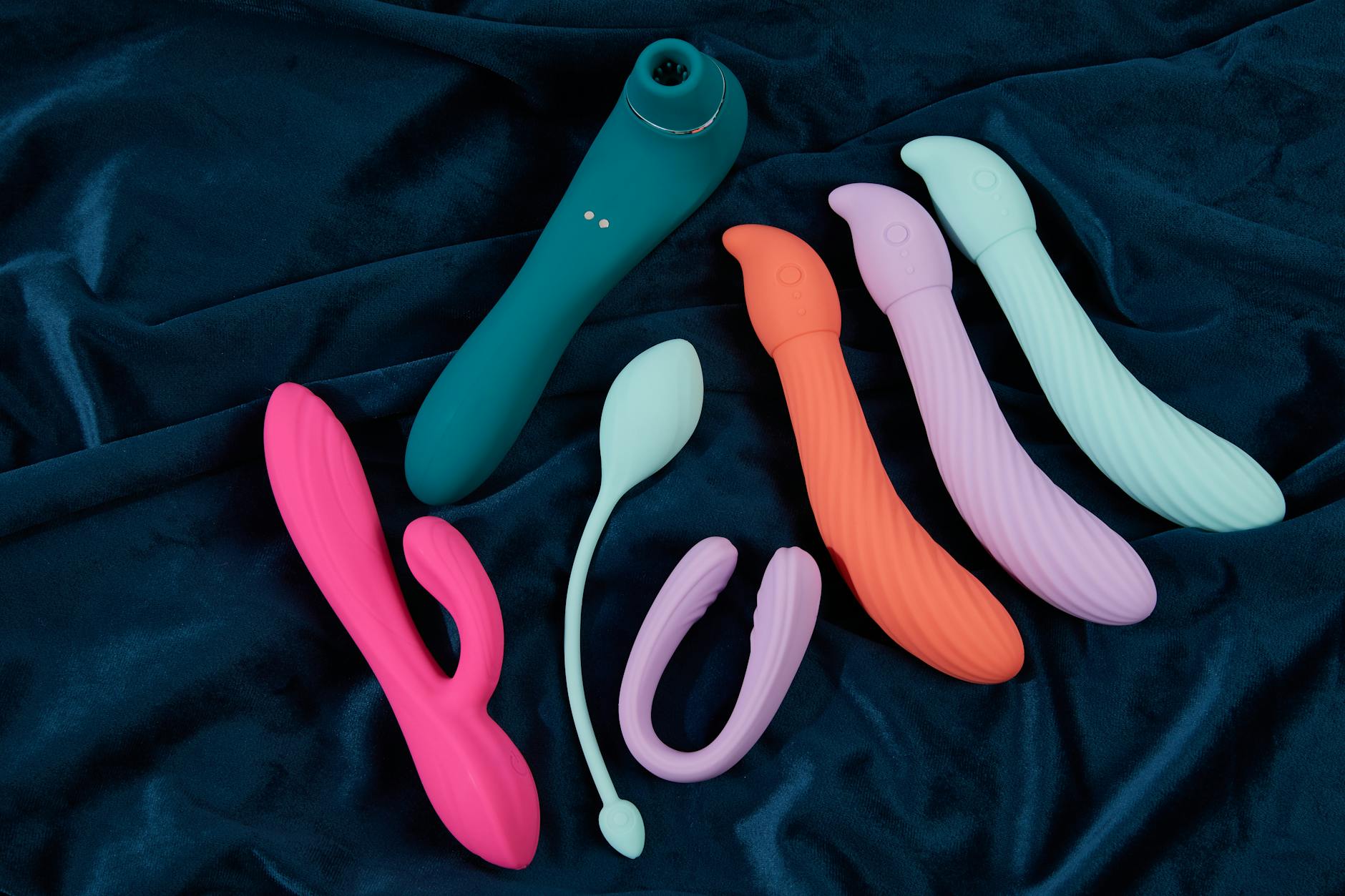
Photo by IFONNX Toys on Pexels
And it gets worse when someone has difficulty with orgasm for any reason. Maybe she has medication side effects. Maybe his anxiety is genuinely erectile. Maybe they're both just tired. The moment pleasure becomes conditional on "performing," the nervous system shuts down. Anxiety and arousal literally cannot coexist.
Why Introducing a Lemon Vibrator Changes the Dynamic
When you add a lemon sucker or lemon clitoral vibrator into partnered sex, three things happen immediately.
First, the success criteria shift. Instead of "Can my partner make this happen," it becomes "Can we make this happen together." The goal is no longer proving something. It's exploring something. This is a small semantic shift with massive psychological weight.
Second, direct stimulation with a clitoral vibrator removes the variable that was creating the anxiety in the first place. If he was anxious about bringing her to orgasm with his hands or mouth alone, a lemon vibrator is not a failure on his part. It's a tool you're both using. He's not being replaced. He's being freed.
Third, the nervous system gets a break. If you've been in performance mode for months or years, just introducing something new sends a signal: "This is different. The old rules don't apply here." Novelty rewires the brain's stress response.
I've seen couples go from "we haven't had sex in six months" to "we actually enjoy it again" within a few weeks of introducing a lemon vibrator. The vibrator itself isn't the cure. The shift in frame is.
How to Introduce This Without Making It Weird
The conversation matters more than the toy. Here's what I recommend.
Don't lead with the problem. Don't say, "I want to try this because you're taking too long" or "I read that this helps with erectile issues." That's just shifting the performance pressure to a different subject.
Instead, lead with curiosity and pleasure. "I've been interested in trying something new. Would you be open to exploring this together?" The word "together" is load-bearing. It says: this is a we thing, not a fix for you.
If he's worried about being replaced, say it directly. "This isn't about you not being enough. It's about us both feeling less pressure and more pleasure." Then show him that a lemon clitoral vibrator actually amplifies partnered sensation. He can use it on you. You can use it together. It becomes a shared tool, not a substitute.
Start with lower intensities and patterns. Don't jump to the strongest setting on the first try. Low intensity also feels less clinical and more integrated into foreplay. A lemon vibrator at pattern 1 or 2 is barely noticeable alongside partnered touch. It's an addition, not a replacement.
The Specific Ways This Alleviates Performance Anxiety
When someone's been anxious about sexual performance, their body has learned a threat response. Adding a vibrator with consistent, predictable stimulation actually helps rewire that. Here's why it works.
Predictable pleasure. Your hands and mouth vary in pressure and rhythm based on fatigue, distraction, or nerves. A clitoral vibrator maintains consistent stimulation. This removes one variable from the equation and gives the nervous system something reliable to work with.
Reduced time pressure. If orgasm is no longer contingent on his effort, neither of you is watching the clock. You can both relax into sensation instead of managing expectations. Sometimes removing time pressure is the only thing needed to make orgasm happen.
Permission to focus on connection. Once the vibrator is handling direct stimulation, he can focus on intimacy. Kissing, eye contact, touch, presence. These things matter more to overall satisfaction than the mechanics of how orgasm arrives. A lemon vibrator lets you separate the mechanics from the intimacy.
Reclaiming pleasure as separate from performance. If you experience pleasure with a vibrator while your partner is present and engaged, you're learning that pleasure isn't about proving his adequacy. It's about sensation. This distinction rewires how both of you think about sex.
What Happens After You Introduce One
Honestly, one of two things happens. Either the pressure dissolves because you both feel less stuck, or it becomes clear that the anxiety is about something else. Sometimes performance pressure is actually about distance in the relationship, resentment, or his own insecurity about aging or body image. A lemon vibrator can't fix those things. But it can give you enough breathing room to actually talk about them.
I had one couple where introducing a clitoral vibrator uncovered that he felt rejected. Once he wasn't anxious about performing, he could admit, "I felt like you didn't want me." That opened a real conversation about what had actually happened. The vibrator wasn't the solution. It was the thing that made the real conversation possible.
For other couples, it's genuinely just the relief they needed. Permission. Permission to stop trying so hard. Permission to use tools. Permission to enjoy sex differently than they did at 25.

Photo by Ihsan Adityawarman on Pexels
The Science of Why This Works
Performance anxiety activates the sympathetic nervous system (fight-or-flight). This constricts blood vessels, tightens muscles, and floods the body with cortisol. Pleasure requires the parasympathetic nervous system (rest-and-digest) to be dominant. These two cannot run simultaneously.
When you remove the pressure to perform (which is what a lemon vibrator does), the parasympathetic system can activate. Added to that, direct clitoral stimulation via a vibrator is one of the most efficient ways to reach orgasm for people with vulvas. If orgasm was difficult before, making it easier is inherently anxiety-reducing.
Your partner's brain starts learning: "Sex doesn't have to be effortful. My pleasure isn't contingent on someone else's performance. We can both feel good." Neuroplasticity means these patterns can genuinely rewire over time.
When to Talk to Someone Else
If performance anxiety persists after removing the pressure variable, it's worth exploring with a sex-positive therapist. Sometimes it's rooted in deeper insecurity, trauma, or beliefs about masculinity or adequacy that need more support than a new tool can provide.
If erectile dysfunction is involved, a medical evaluation is worth pursuing. ED has physical causes that range from vascular issues to medication side effects. A lemon clitoral vibrator helps with the pressure piece, but it doesn't address the underlying physiology. Both conversations can happen in parallel.
Likewise, if someone has always had difficulty with orgasm, a vibrator helps immensely. But it's also worth checking whether there are other factors: medications, hormones, pelvic floor tension, or disconnection from their own body. A comprehensive approach works better than any single tool.
Making It Last
The couples who keep this momentum are the ones who normalize the vibrator as a regular part of sex, not an emergency intervention. Use it sometimes. Explore without it other times. Let the novelty wear off so it becomes just another thing in the toolkit, not the solution to the problem.
And importantly, keep talking. Check in about what feels good. Notice if the anxiety is creeping back. Adjust patterns or intensity. Sex that's this honest requires ongoing communication, but that's actually the thing that heals performance anxiety most of all. Knowing your partner cares more about connection than achievement changes everything.
If you've been stuck in performance anxiety, a lemon vibrator or lemon clitoral vibrator can be the thing that gives you permission to stop trying so hard and start enjoying again. It's not about the toy. It's about what the toy represents: that pleasure is possible without proving anything to anyone.
People Also Ask
Will using a vibrator make my partner feel inadequate?
Not if the conversation is framed as collaborative exploration rather than a fix for his failure. The couples who struggle most are the ones where the vibrator is introduced as criticism ("This will make you come faster"). The couples who thrive frame it as curiosity ("Let's explore this together"). When your partner sees you enjoying sensation and sees himself as part of that, it's connecting, not diminishing.
Can we use a lemon vibrator during partnered penetration?
Yes. Many couples use a clitoral vibrator during penetration to increase stimulation for the receiving partner. The vibrator can be angled to hit the clitoral area while penetration happens. It's one of the most common ways couples integrate a vibrator into sex. Start with lower intensity patterns so the combined sensation doesn't feel overwhelming.
If I need a vibrator to orgasm, does that mean something's wrong with me?
No. Many people, especially women and people with vulvas, find that clitoral vibrators are the most reliable way to reach orgasm. This isn't a dysfunction. It's anatomy. Clitoral vibrators provide consistent, direct stimulation that's difficult to replicate with hands or other methods. Using one is just adapting to how your body works best.
How do I bring this up without sounding like I'm criticizing his performance?
Lead with desire, not lack. "I've been curious about this" or "I want to explore this with you" is different from "This might help you get me there." The second sentence is about his adequacy. The first is about shared pleasure. If he's worried anyway, name it directly: "I know this might feel weird. I want to be clear that I'm not saying anything is wrong. I just want to feel good together."
What if he refuses to try a vibrator because of pride or stubbornness?
That's worth exploring with curiosity, not judgment. Sometimes it's insecurity. Sometimes it's a belief that sex should be a certain way. Sometimes it's fear that it will feel emasculating. Listen to what's actually underneath the refusal. If he's willing to talk about why, you might find the real concern ("I'm afraid you'll prefer it to me") and address that directly. If he's not willing to talk or try, that's information too, and couples counseling can help navigate it.
Can lemon vibrators help if my partner has erectile dysfunction?
Yes, but with caveats. A lemon clitoral vibrator removes performance pressure, which absolutely helps. But ED often has a physical component that needs medical attention too. The vibrator takes the pressure off while he gets evaluated, which is valuable. But he should also see a doctor to rule out vascular issues, medication side effects, or hormonal imbalances. A vibrator helps the psychological piece. Medicine or lifestyle changes address the physiological piece.
Final Thoughts
Performance anxiety in relationships is one of the easiest things to accidentally create and one of the hardest to talk about. A lemon vibrator or lemon sexual toy isn't going to fix a broken relationship, but it can absolutely be the thing that gives you permission to stop performing and start connecting. If you're interested in exploring this, <a href="/contact">get in touch</a> with any questions or concerns. Sometimes just having the conversation with someone who's seen this pattern before makes it easier to have it with your partner.